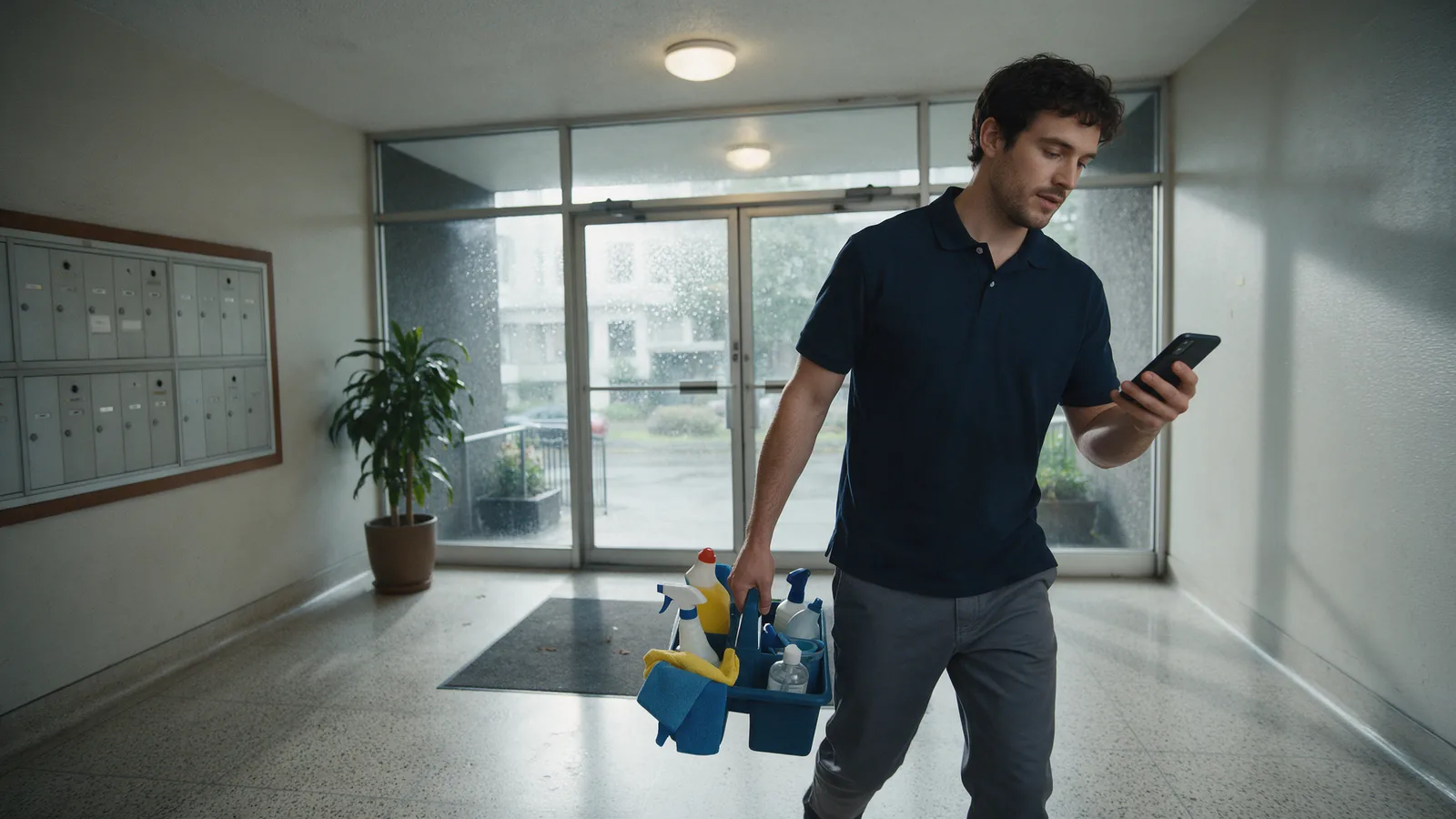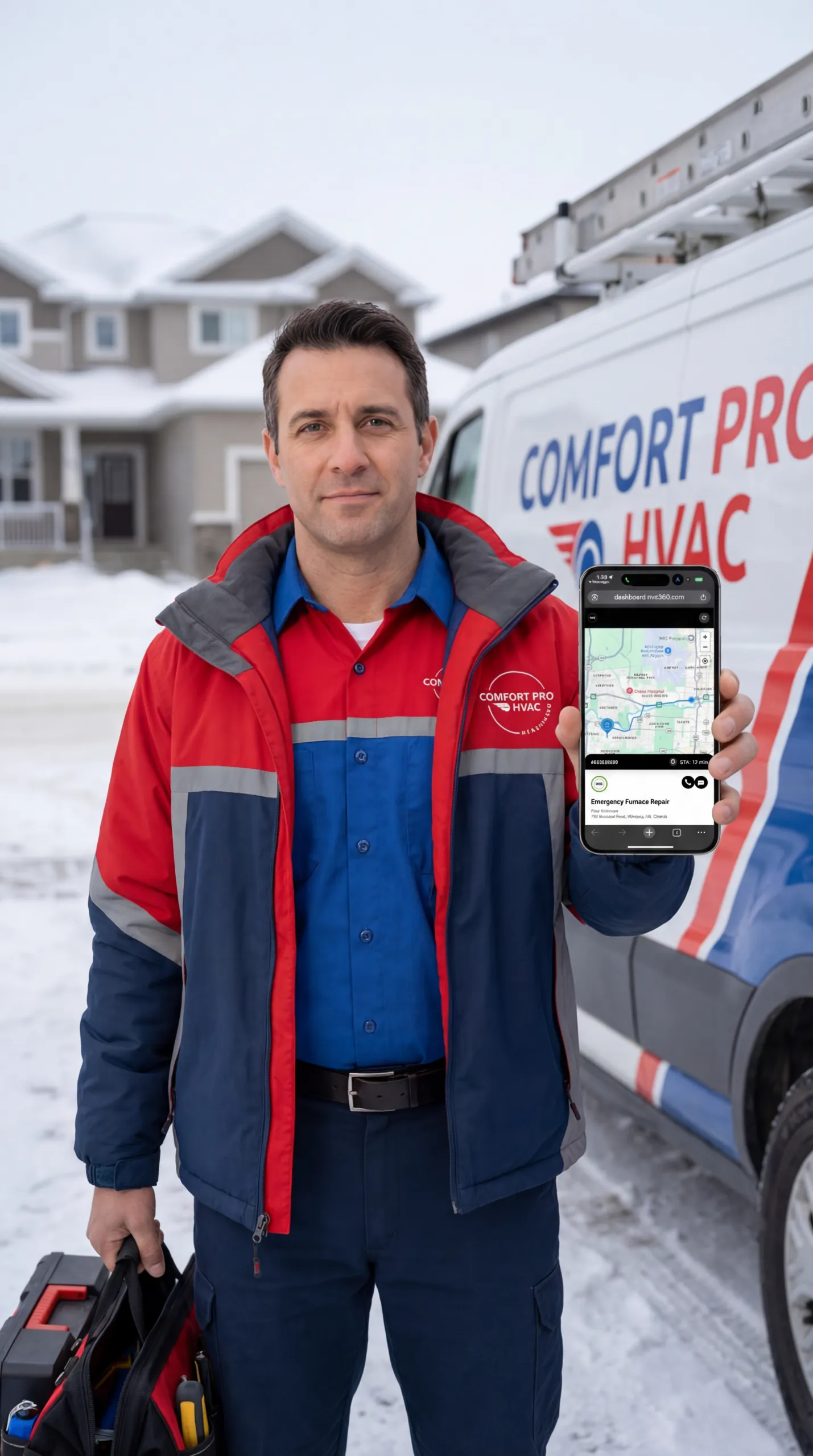
Winter Arrival Times: What Snow Does to ETAs, and What to Tell Customers
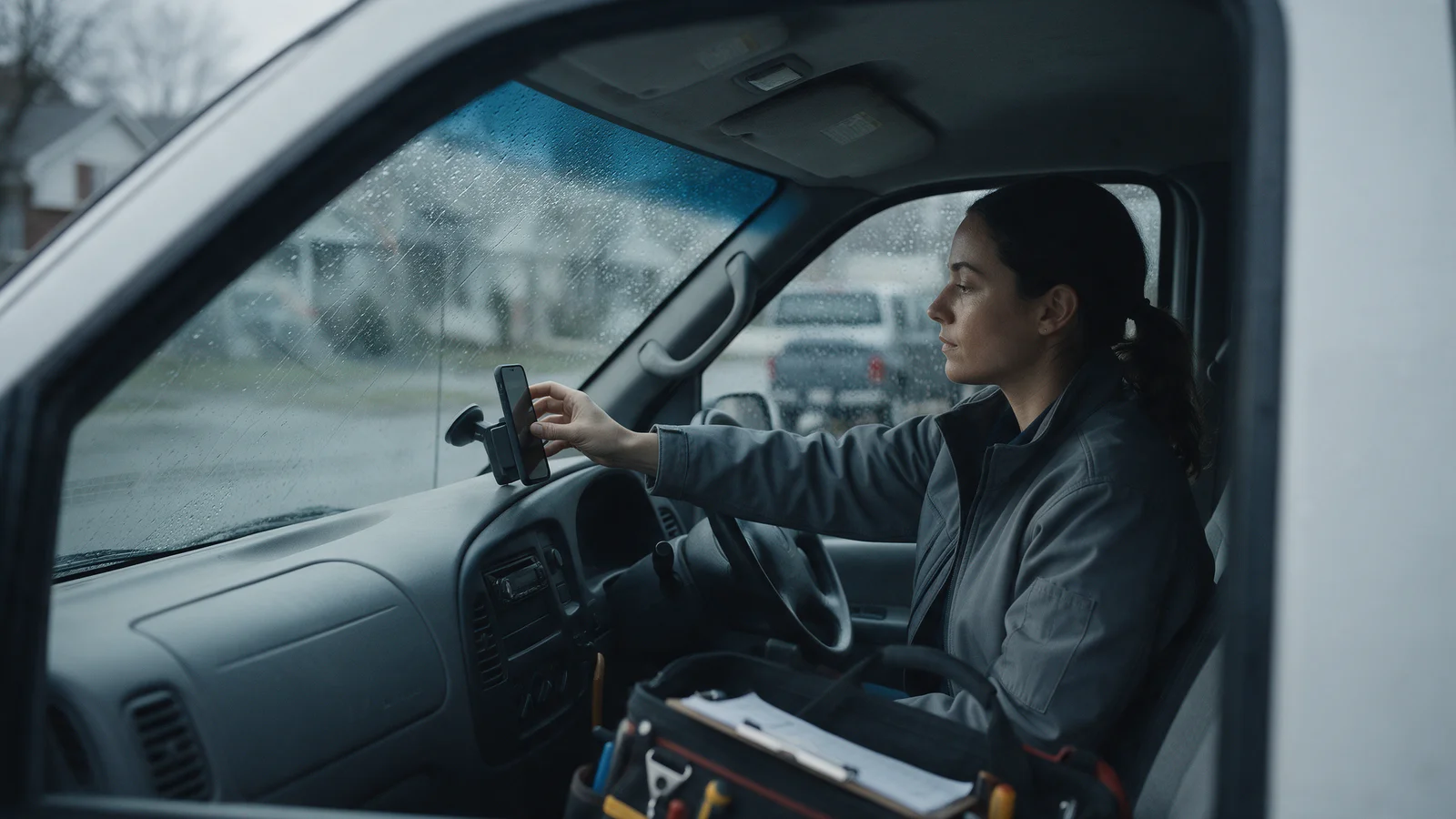
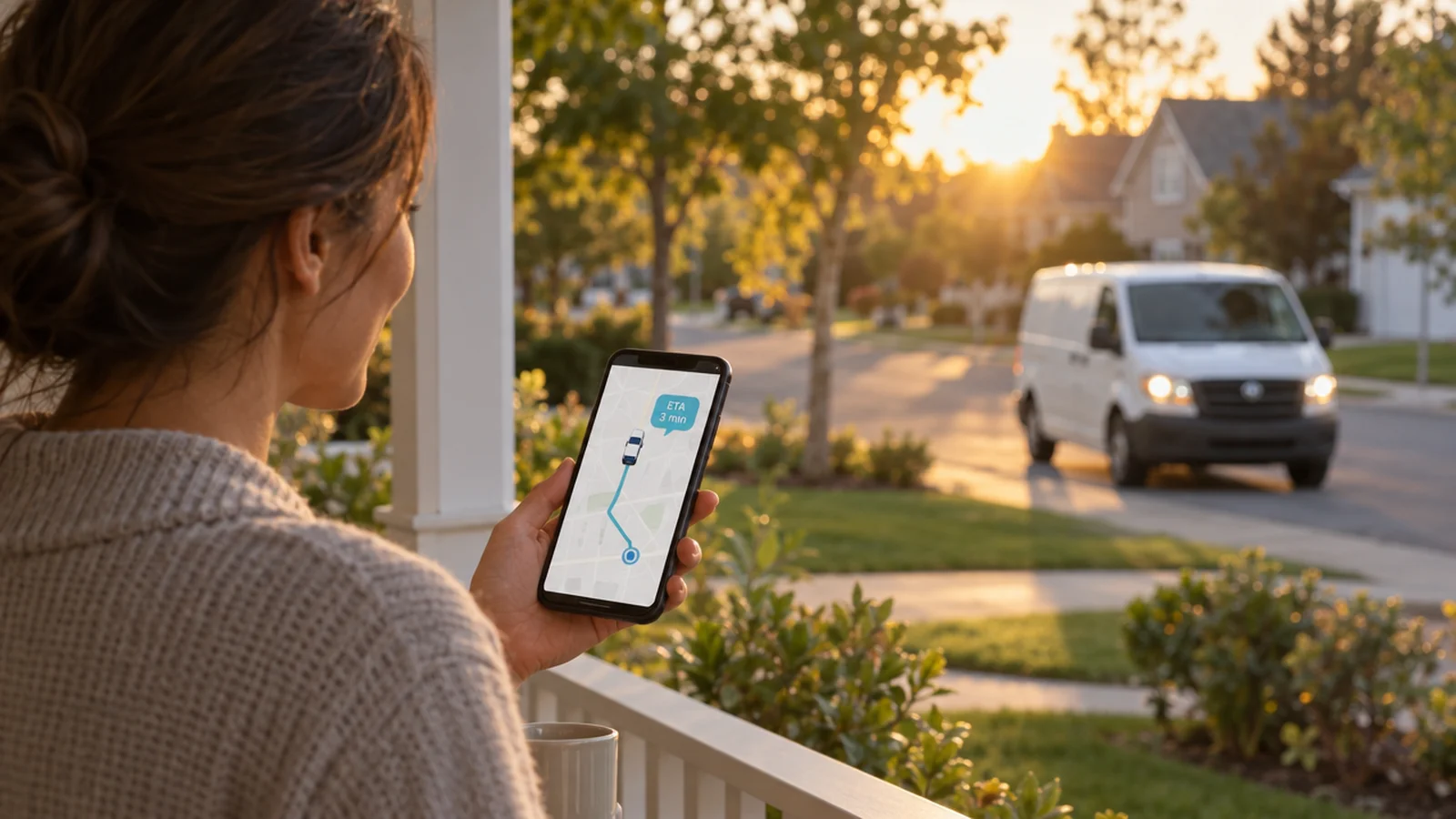
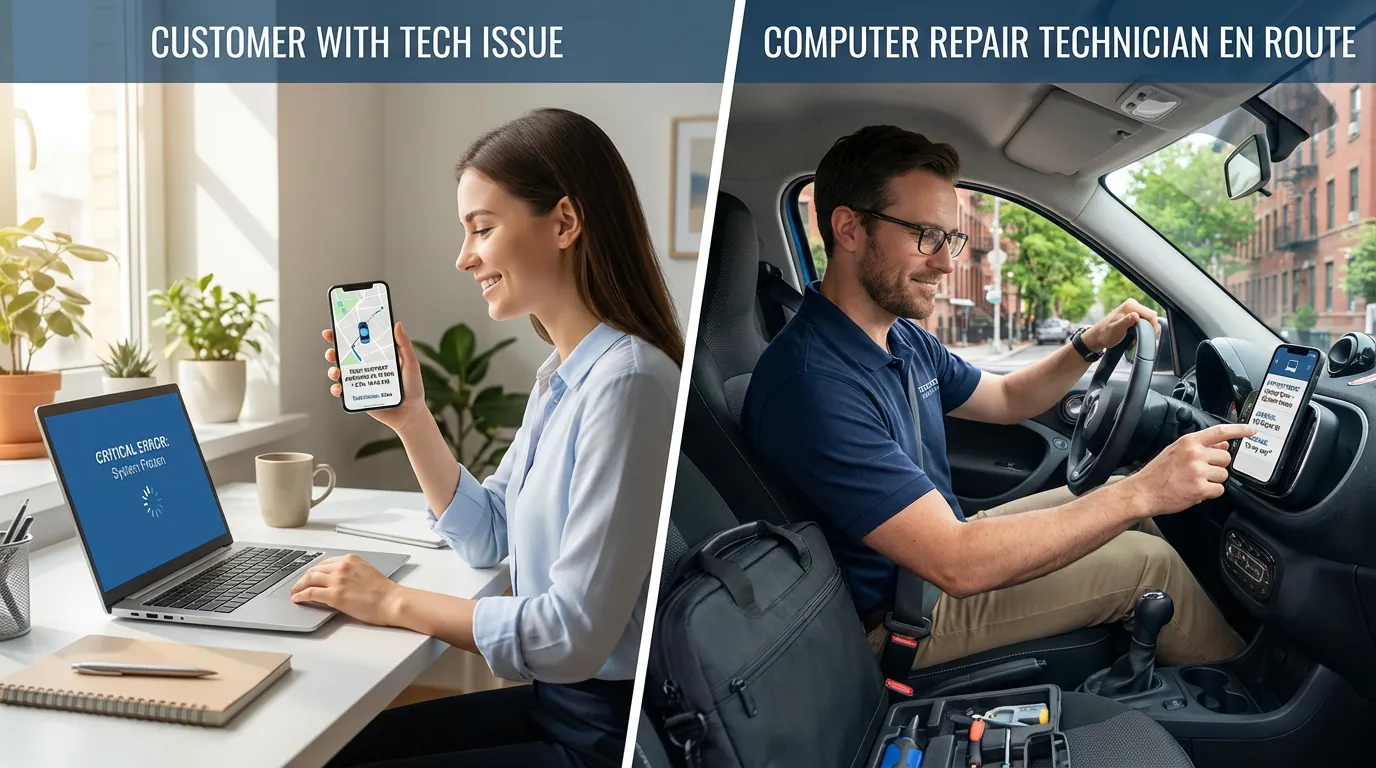
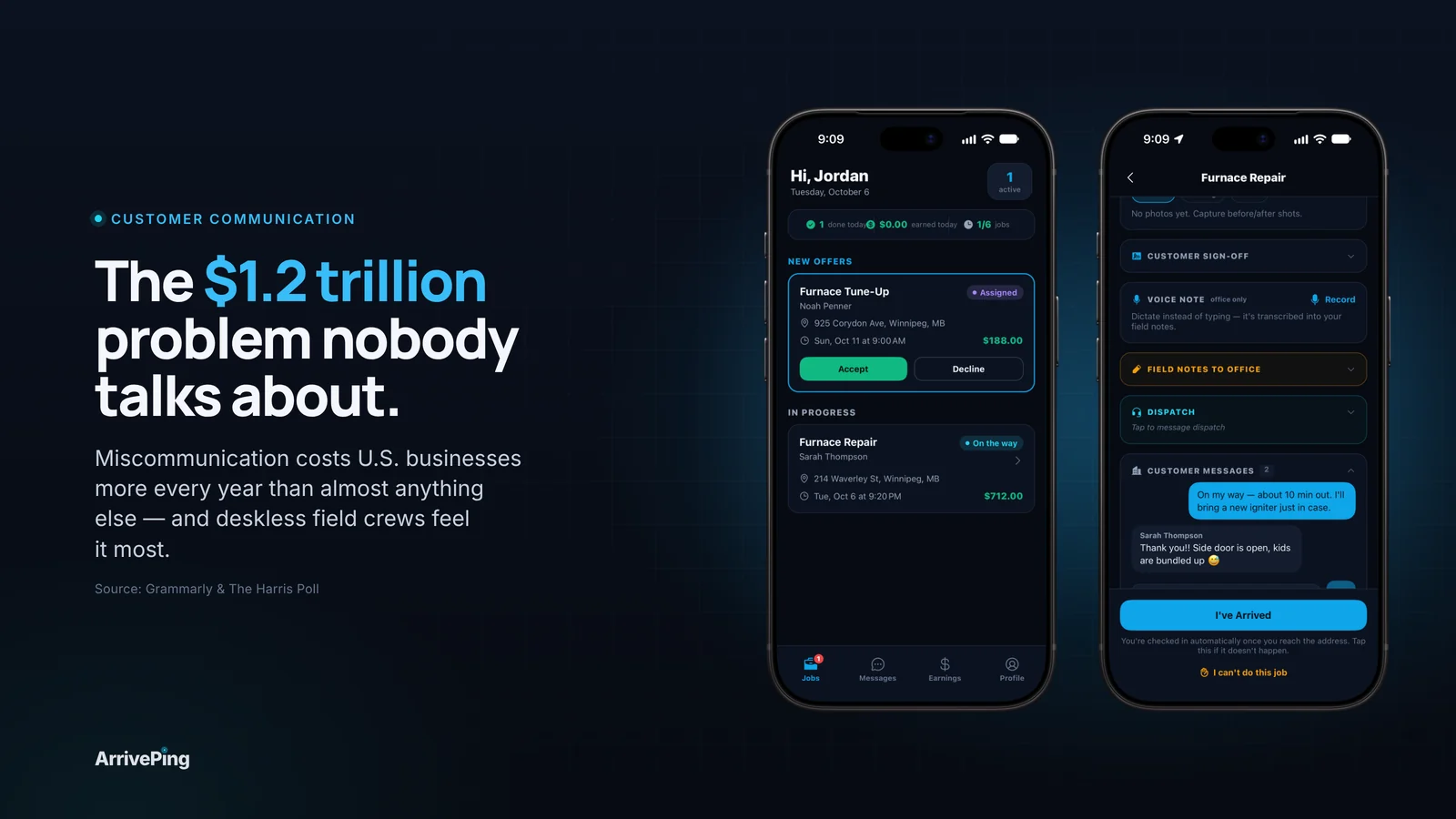
Snow cuts city driving speeds by 30 to 40 percent. What that does to a day of appointments, and the messages that keep customers calm without rushing crews.

Practical, sourced articles for businesses that send people to customers: dispatch and scheduling, technician and driver tracking, on-my-way texts, field service software costs and running a more profitable service business. Written by Dan Rosenblat, founder and CEO of NVC360, the Winnipeg company that makes ArrivePing, with sources linked in each post.

Snow cuts city driving speeds by 30 to 40 percent. What that does to a day of appointments, and the messages that keep customers calm without rushing crews.

A sick call at 6:40 a.m. puts four jobs in doubt. How often it happens in the trades, the order to rebuild the day, and what to tell each customer.

Check skills, then availability, then distance. What each extra mile and minute costs a five-technician team, and the four assignment rules compared.

The five texts to send around a service visit, when to send each, copy-ready templates under 160 characters, and the CASL and TCPA rules that apply.

A 5-question test for trades, cleaning, home care and delivery teams, a worked ROI example with every input shown, and when a spreadsheet is still enough.

Setup takes an hour to six months, depending on the product and who does the work. Realistic timelines, what eats the time, and a 30-day rollout plan.
A checklist for the live tracking page you send with an on-my-way text: what to show, what to hide, when location sharing should start and stop, and why.

Surveys of thousands of small businesses blame the same two things when software stalls: cost and complexity. How to remove both, with the tutorials.

Big software rollouts run over budget and under-deliver. Why small service businesses win with low-cost, low-training tools that pay back in weeks, not years.

How a 3–10 tech HVAC, plumbing or electrical shop should choose field service software in 2026: must-haves, free plans, list prices and a one-week test.

What field service software costs in 2026: list prices for 4-, 12- and 28-person teams, who counts as a user, GPS add-ons and the fees plan prices leave out.
Phone app or a GPS tracker in every van? What each tracks, what it costs, the privacy rules in Canada and the U.S., and how a service business should choose.

Product, price and service can all be right and one bad arrival still loses the customer. The research on the last mile, and how a live ETA fixes it.

A missed or silent appointment costs the customer a day and costs you the customer. The data on waiting, no-shows and reviews, plus a five-moment fix.

Repeat customers and referrals cost far less than new ones. The data on loyalty, waiting and texting, and a playbook for becoming the provider people call.

How connecting dispatch, technician context and proactive customer updates cuts the cost of schedule changes and makes you the provider customers prefer.

Twelve ways manual scheduling, paper work orders and reactive customer communication drain field service margins, with industry data and practical fixes.

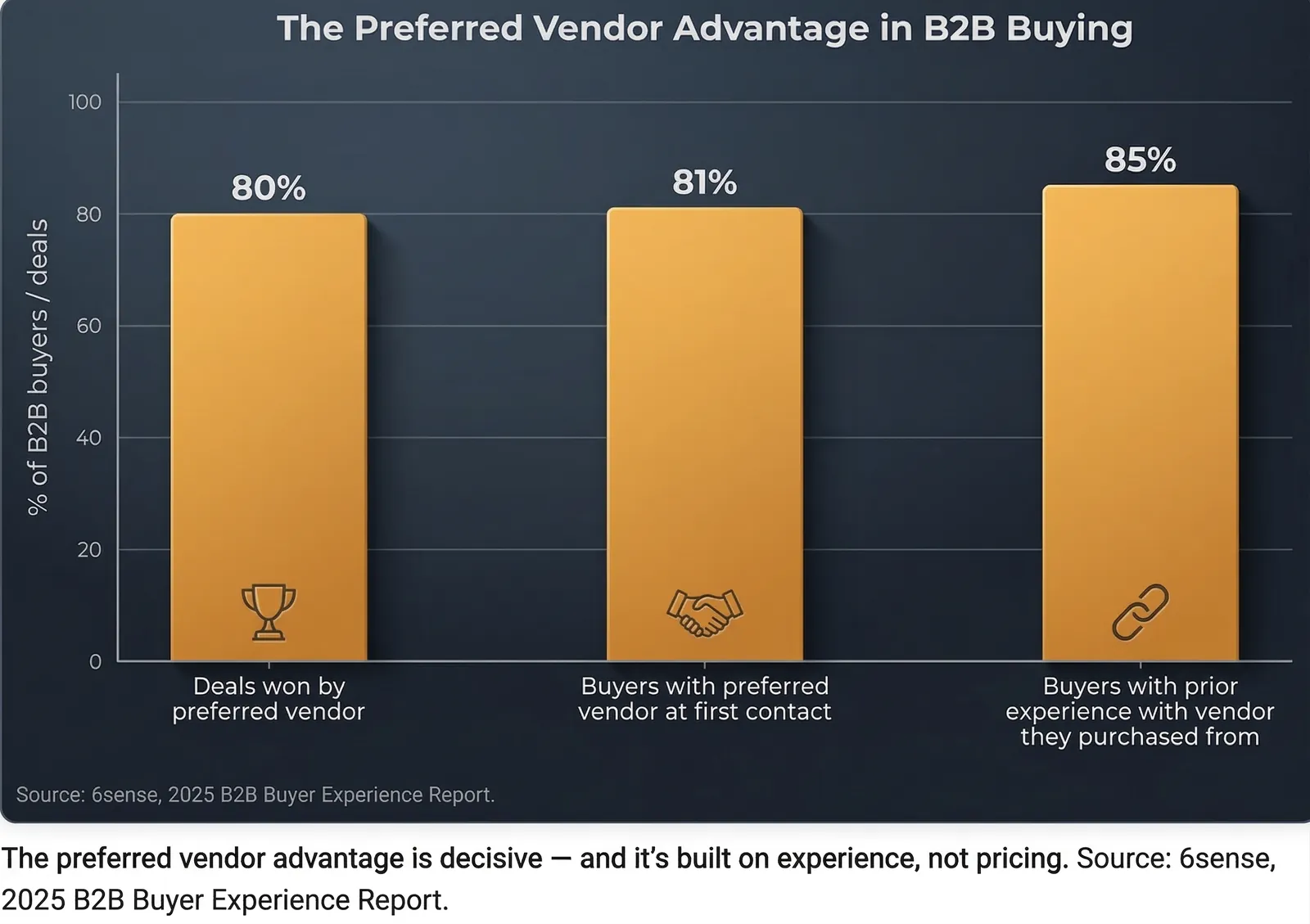
Why competing on price squeezes contractor margins, and how being the preferred provider supports premium pricing, retention and referrals.

Why live tracking and proactive updates from apps like Uber reset what homeowners expect from contractors, and what the research says about loyalty and price.

Why trades companies that measure technician productivity, dispatch efficiency, marketing ROI and retention will protect margins better than growth alone.

Why live technician tracking, accurate ETAs and proactive client updates now matter more than feature lists, with market, labour and customer data for 2026.

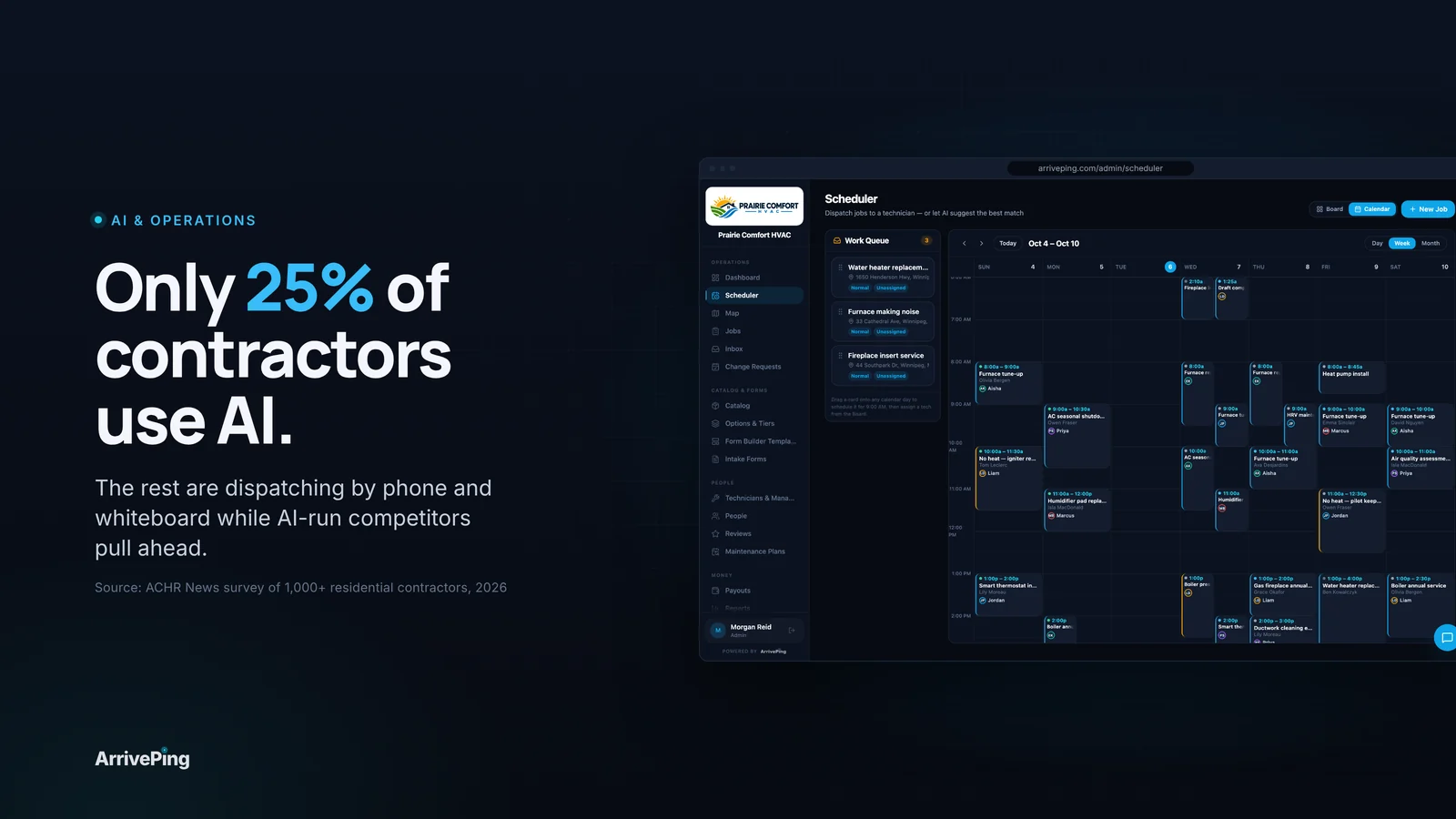
Only about a quarter of residential contractors use AI. What the 2026 surveys show about the adoption gap, its cost, and where automation helps field teams.
How real-time technician tracking affects first-time fix rates, workforce productivity and customer calls, with the industry figures behind each claim.

Most construction firms still use little or no AI. What RICS, BCG and Deloitte data show about the gap, and why scheduling and client updates come first.

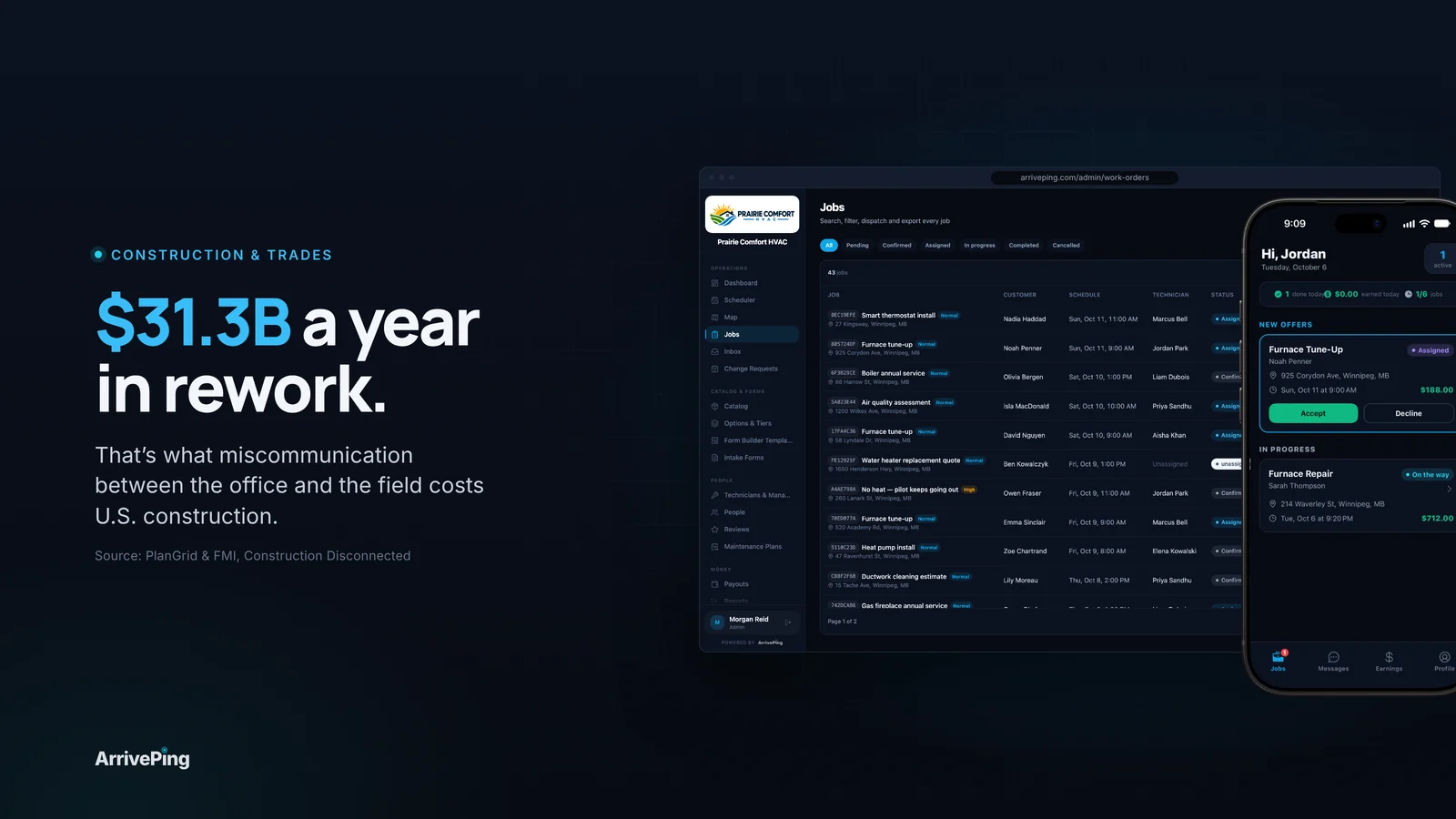
PlanGrid and FMI tie $31.3B a year in U.S. construction rework to miscommunication. Where field communication breaks down, what it costs, and how to fix it.

Research from PwC, 6sense and Gartner on why convenience and low-effort communication win repeat work, and how field service teams can lower price pushback.

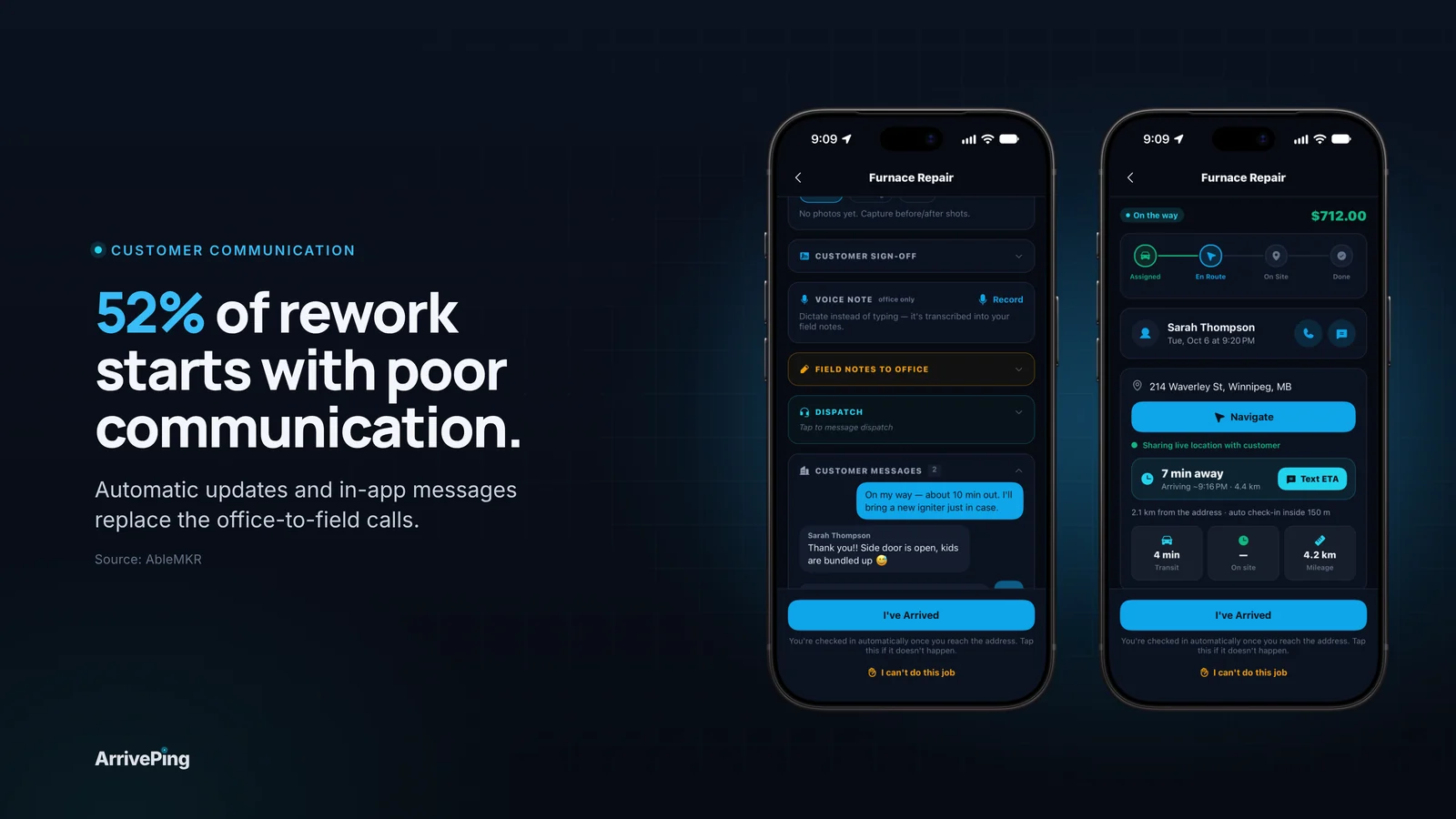
Phone tag between the office, technicians and customers eats paid hours. Where that time goes, what it costs, and how automatic updates replace the calls.

What poor communication costs U.S. businesses, why deskless field crews feel it most, and the research on construction rework, home services and home care.

What poor communication costs field service and construction teams in lost hours, rework and delays, and how automated updates cut office-to-field calls.

Why customers left waiting focus on price, what research on waiting and convenience shows, and how live tracking shifts attention from the invoice to service.

How ServiceTitan, Jobber and Samsara approach field service, where tracking, dispatch and customer updates fall short, and where ArrivePing fits.
How live technician tracking lifts first-time fix and job completion rates: earlier dispatcher action, closest-tech assignment and customers who are home.

Why communication decides whether home service customers come back, with data on the cost of miscommunication, the “Uber effect” and customer retention.
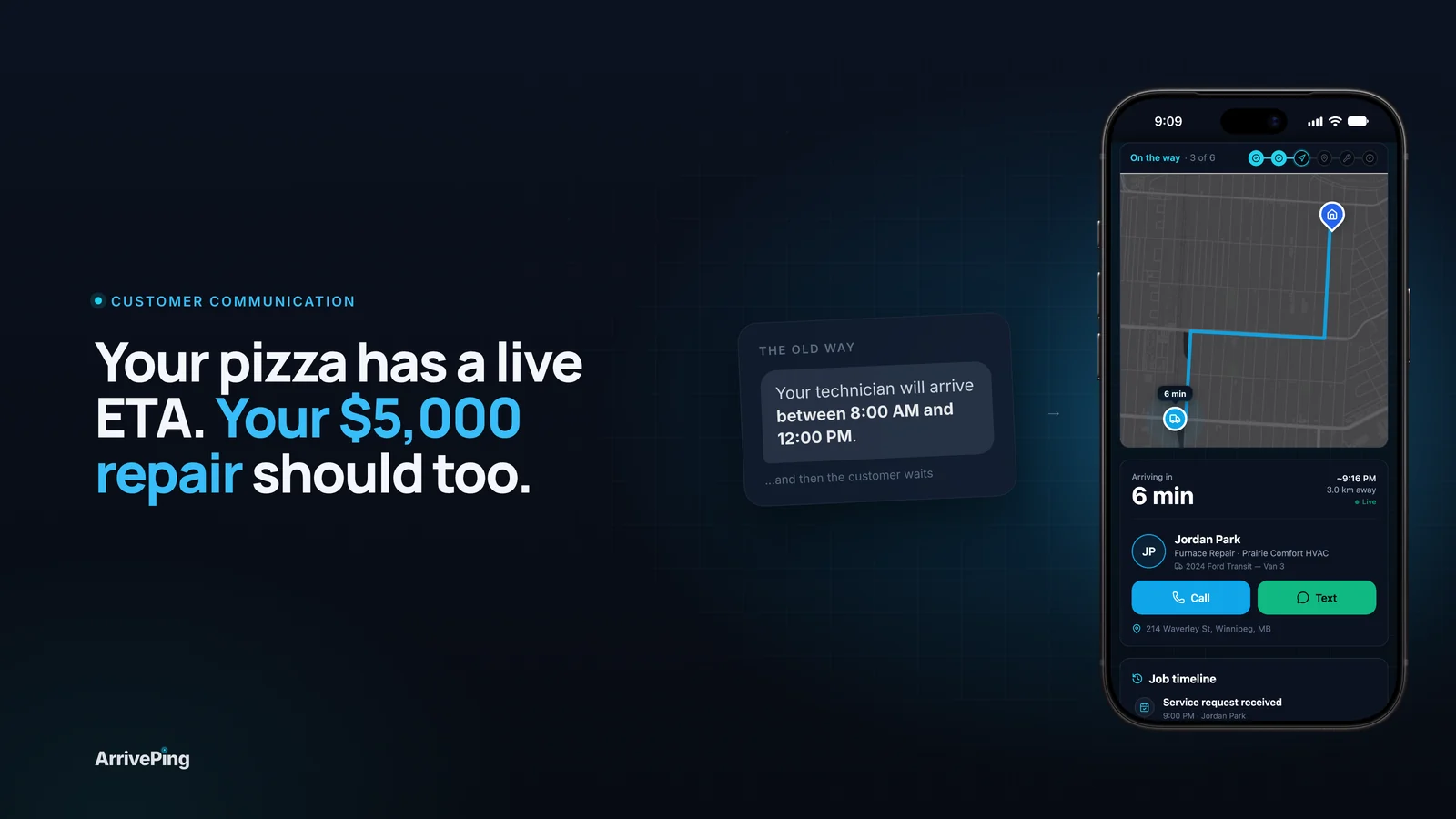
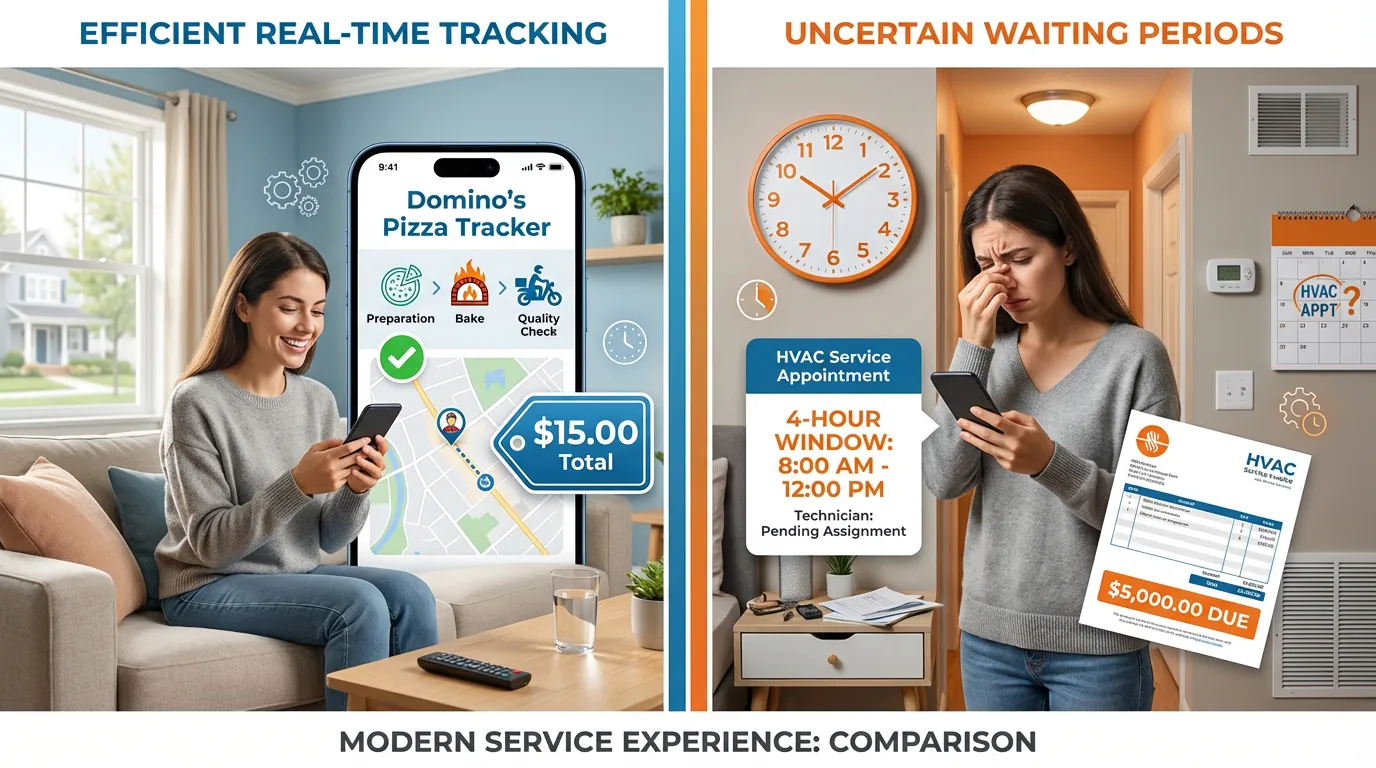
Why a $25 pizza is easier to follow than a $5,000 furnace repair, and how live tracking and automatic on-my-way texts close the gap for service companies.

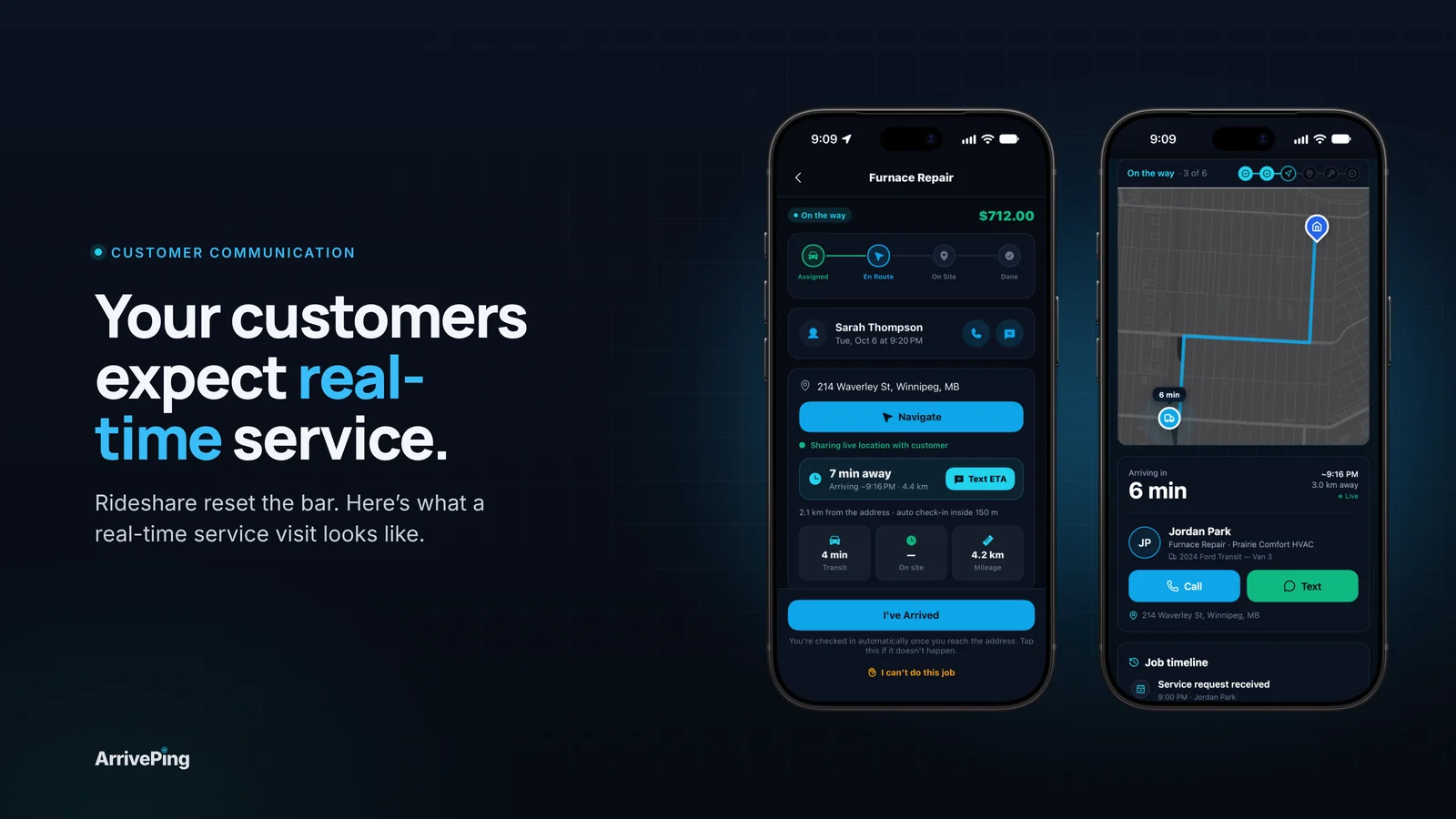
How rideshare-style tracking reset field service expectations, why smaller firms face a technology gap, and what a real-time service visit looks like.

A five-step plan to add real-time technician tracking and automated client texts to a field service business, plus the business case and a rollout checklist.

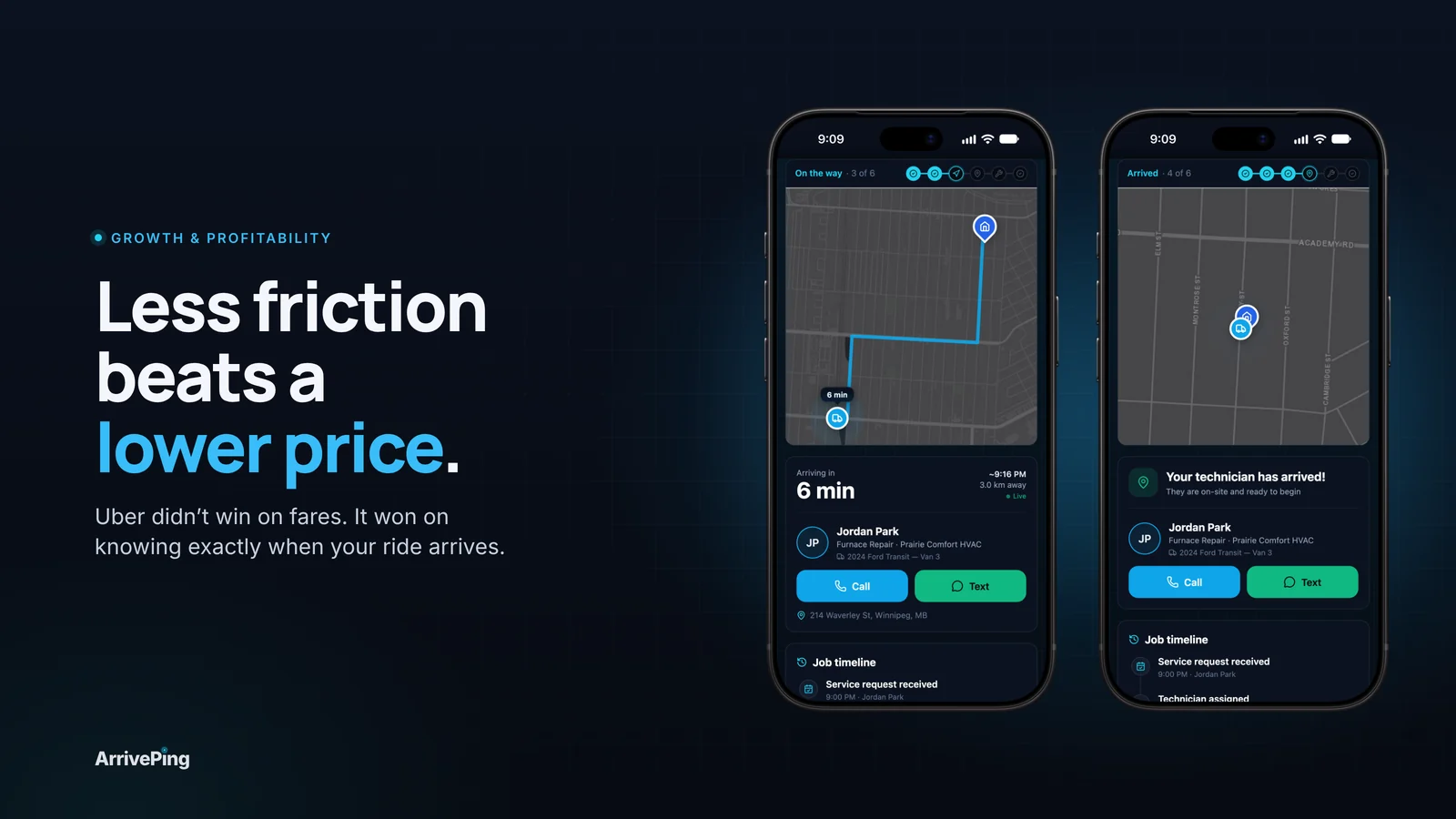
How Uber beat taxis on ease rather than price, what ride-hailing data shows about trust and price shopping, and how field service firms can cut friction.

Why construction firms can't hire their way out of the labor shortage, and how mobile dispatch, digital paperwork and less drive time free up existing crews.
A tongue-in-cheek list of ten things homeowners could do instead of waiting out a four-hour service window, and why live technician ETAs end the wait.

ServiceTitan's FY2025 results, its 2025 Residential Services and AI reports, and the ST-72 release, read for what they signal to HVAC and plumbing operators.

Why field service operations break down at scale, what high-performing teams prioritize, and how to choose software that fits your workflow, not replaces it.

Why phone tag between office, technician and customer costs field service businesses time and leads, and how automatic ETAs and live tracking cut those calls.

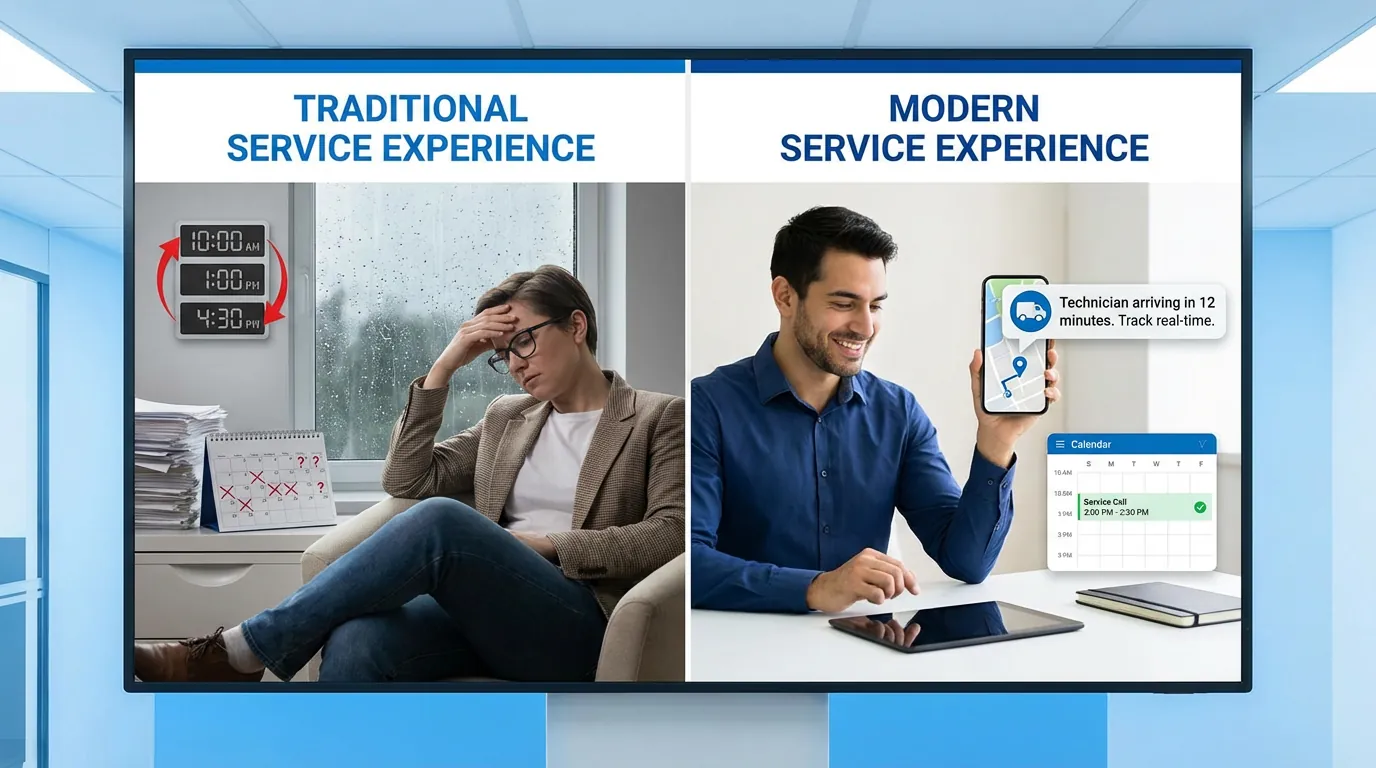
How four-hour appointment windows erode customer loyalty, what they cost a small service business in time and churn, and why live arrival tracking matters.

A $15 pizza comes with live tracking while a $5,000 HVAC repair comes with a four-hour window. Why field service fell behind and what closing the gap takes.

Why vague service windows and phone tag cost trades businesses customers, and how live ETAs, tracking links and automated texts change the client experience.

How communication breakdowns drain construction and field service businesses, what real-time visibility replaces, and the field origins of ArrivePing.

What the data says about AI in field service, why missed calls cost trades more than they think, and how pairing AI with human follow-up drives growth.
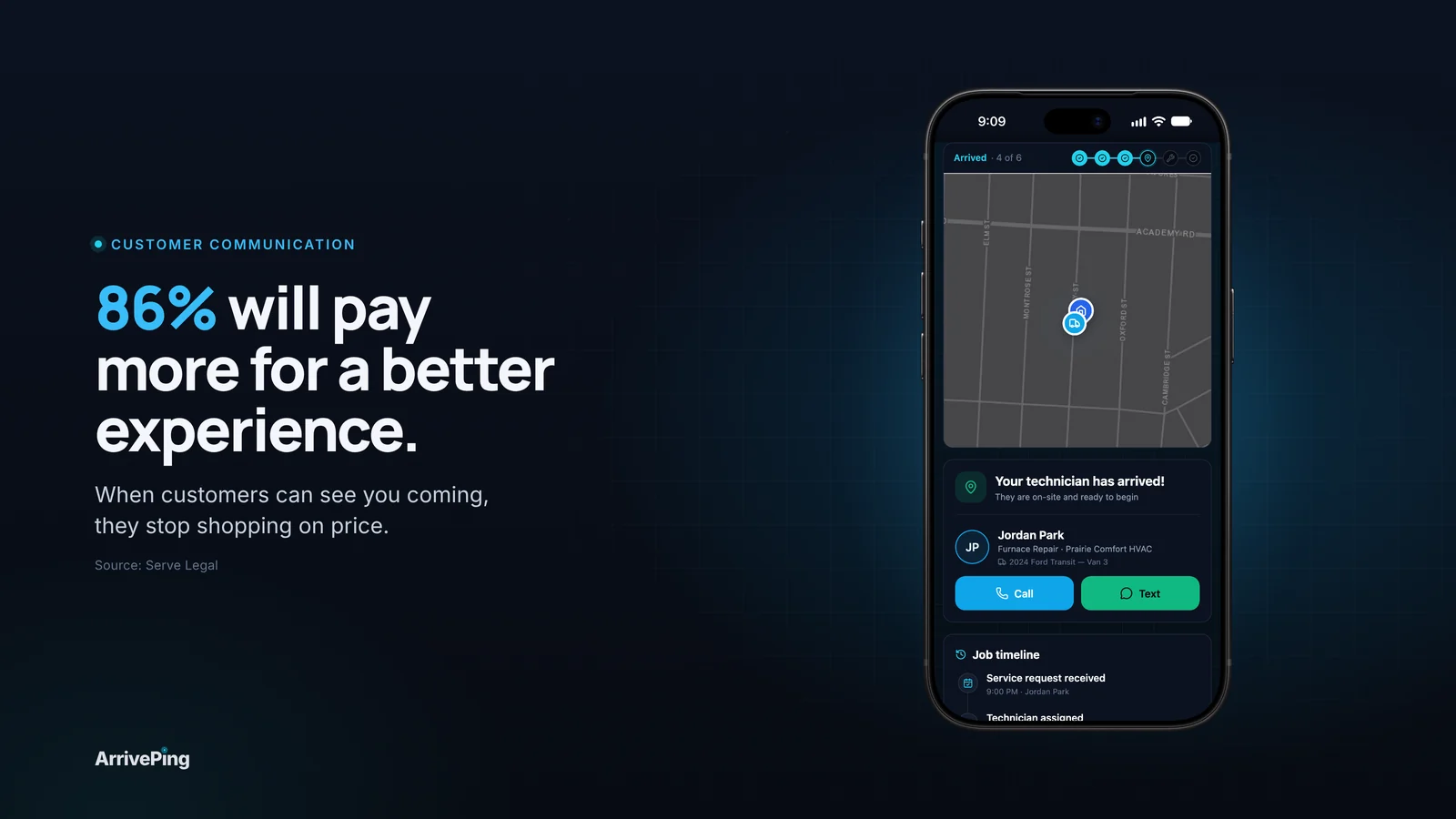
How live technician tracking gives customers a clear ETA, cuts “where’s my tech?” calls, and helps dispatchers react to delays and plan staffing better.

How Uber-style expectations apply to field service, and how live tracking, on-my-way texts and automatic assignment help technicians and customers alike.

What delivery and appointment research says about real-time ETA updates: customers want them, and they cut no-shows and support calls and help retention.
Sign up, paste your website and the setup agent builds your workspace while you watch. Free for 30 days, then from US$49 a month.
Moving from another system or need a custom integration? contact@nvc360.com
No setup fee, no contract, no GPS hardware.