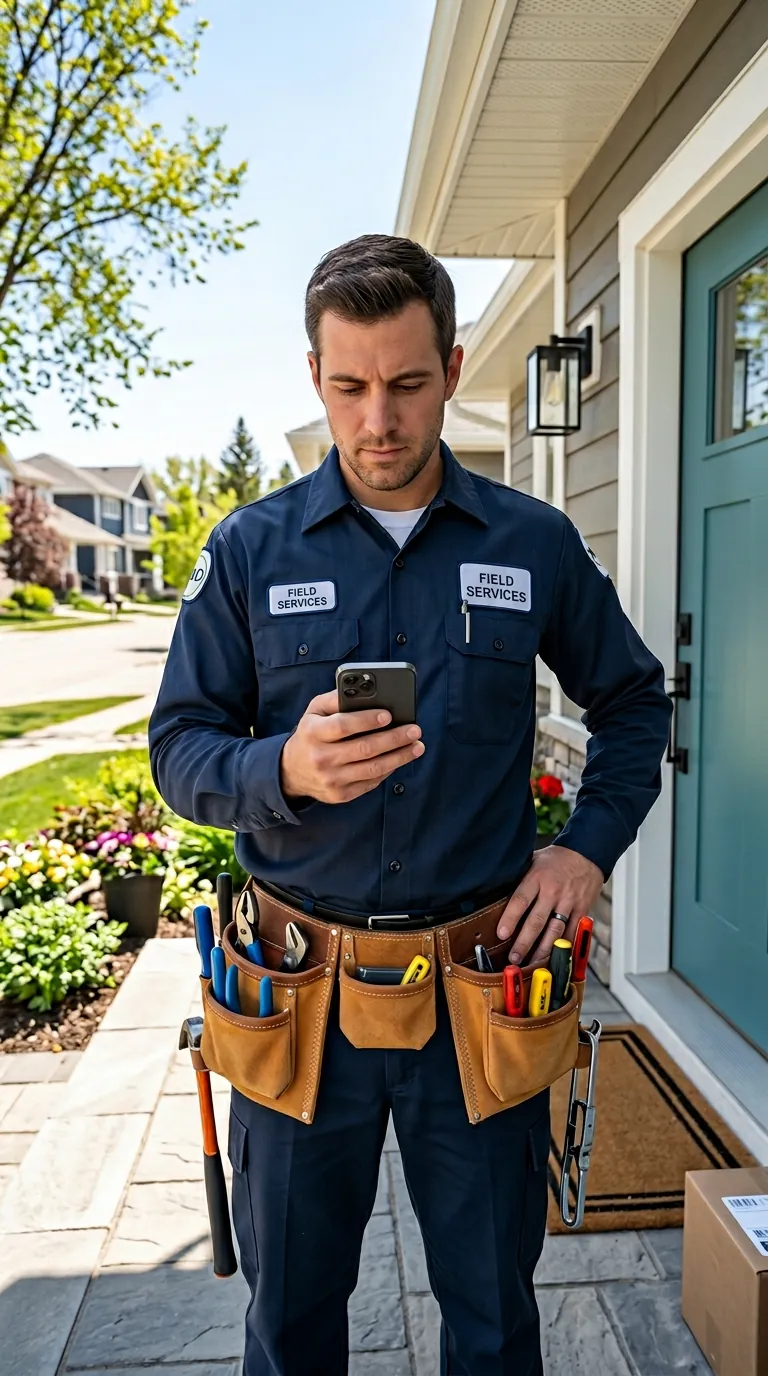
Navigating the Field Service Frontier: Where ArrivePing Fits
How ServiceTitan, Jobber and Samsara approach field service, where tracking, dispatch and customer updates fall short, and where ArrivePing fits.
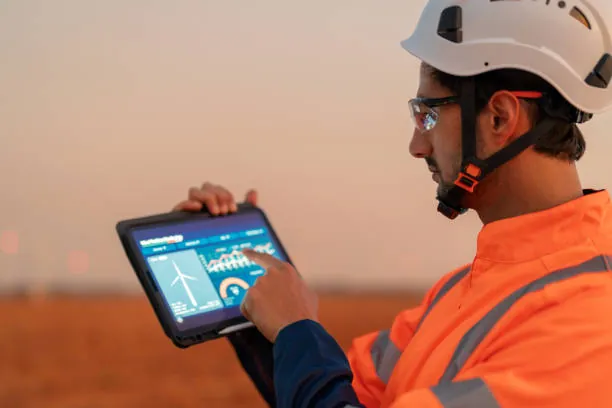
Introduction: The Unseen Costs of Outdated Field Service
In the world of field service management (FSM), businesses are constantly striving for efficiency, customer satisfaction, and operational excellence. Yet many grapple with outdated systems, communication breakdowns, and a lack of real-time visibility that silently erode profits and tarnish reputations. The global FSM market, projected by Fortune Business Insights and Fieldwork to reach $6.14 billion in 2026 and grow to $9.68 billion by 2030 with a CAGR between 9.54% and 14.1%, underscores both the potential and the fierce competition within this sector. However, amidst this growth, a critical question emerges: are current solutions truly meeting the complex demands of modern field operations, especially for specialized industries like construction?
The High Cost of Inefficiency: A Deep Dive into Industry Challenges
The field service industry is plagued by inefficiencies that directly impact the bottom line. According to Salesforce, 47% of appointments don’t go as planned, leading to a ripple effect of delays and customer dissatisfaction. Customer expectations are at an all-time high, with 84% expecting real-time technician tracking (Fieldproxy) and 67% demanding faster response times (Sightcall). Yet many existing FSM platforms fall short, leaving a significant gap between expectation and reality.
“Meeting customer expectations is the leading challenge, cited by 74% of field service leaders.” — Field Nation, The definitive guide to field service trends in 2026
Operational inefficiencies extend beyond customer-facing issues. The industry faces significant internal struggles, including 85% of technicians feeling that knowledge is changing faster than training and 57% experiencing burnout, according to FieldServicely. These challenges highlight a critical need for solutions that not only streamline external communication but also support the workforce and tighten internal processes.
A Better Way: Streamlining Field Work and Communication
FieldServicely’s industry statistics point to FSM technologies that can reduce travel distance by 15%, increase time efficiency by 20%, and cut fuel costs by 20-30%, and to telematics adoption by 98% of fleets as evidence of the industry’s move towards data-driven decision-making. But the bigger opportunity lies in pairing those efficiencies with smarter dispatching and automatic customer communication.
This is where ArrivePing comes in. It is designed to remove the communication gaps that plague field service operations: see where all your people are, create custom work orders, and keep your customers updated automatically. ArrivePing is built for home services, construction and specialty service operations, providing an “Uber-like” experience for both teams and customers.
The Competitive Landscape: Where ArrivePing Fits
To understand where ArrivePing fits, it helps to look at how some of the major players in the FSM industry position themselves. What follows is our view of each, not a feature audit; for a current side-by-side, see how ArrivePing compares.
ServiceTitan: Often considered the “800-lb gorilla” in FSM, ServiceTitan is a comprehensive platform with a strong position in HVAC, plumbing, and electrical. Its breadth, pricing and implementation effort are geared to larger home service companies, which can make it more than many mid-market construction and specialty subcontractors need.
Jobber: Positioned as an SMB-friendly option, Jobber offers a clean user experience, easy onboarding and a strong mobile experience, which makes it a good fit for small to mid-size home service businesses. Larger, more complex field teams may find they want more from dispatch and real-time visibility as they grow.
Samsara: Primarily a fleet operations and IoT platform, Samsara is strong in real-time vehicle tracking and IoT integrations for logistics, utilities, and construction assets. It is built around installed hardware and fleet data rather than around the job and the customer conversation.
The “Uber-Like” Experience in Action
ArrivePing was built from the inside out by NVC360, out of the real-world challenges of running more than 800 field technicians. That firsthand experience shaped a product focused on the intersection of real-time technician tracking, automatic dispatching, automated customer communication, and job management, without vehicle GPS hardware: location comes from the technician app on each person’s phone.
Imagine a customer receiving an automatic on-my-way text with a live tracking link that shows the technician’s progress and ETA, with buttons to text or call. If the job slips, they get a running-late notice instead of having to phone the office. This “Uber-like” experience improves customer satisfaction and reduces inbound calls. For operations managers, automatic assignment ranks technicians by distance, skill match, availability and current workload, and dispatchers can override any pick when the day changes.
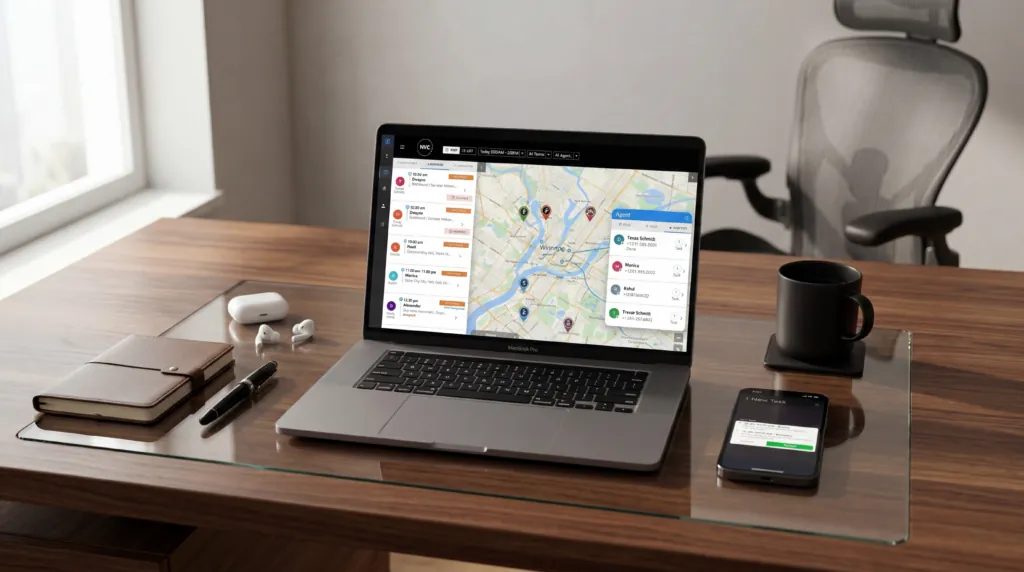
Live technician visibility
ArrivePing focuses on the job lifecycle, customer communication, and dispatch, and works alongside the accounting and CRM tools you already use through exports, webhooks, Zapier and Make. Pricing is published and graduated: from $49 USD a month for Starter, which includes the first driver; drivers 2–10 are $30 each, 11–30 are $27 each, and 31+ are $25 each. Details are on the pricing page.
Conclusion: The Future of Field Service Is Here
The field service management industry is evolving rapidly, and businesses can no longer afford to rely on fragmented or inadequate solutions. The demand for real-time visibility, automation, and seamless customer communication is only growing. ArrivePing is built to fill that gap for construction, home service and specialty service operations that want calmer dispatch days and better-informed customers, without a heavy implementation.
ArrivePing launches in November 2026. See how it works for your team: book a demo.