
How Real-Time Technician Tracking Improves Job Completion Rates
How live technician tracking lifts first-time fix and job completion rates: earlier dispatcher action, closest-tech assignment and customers who are home.
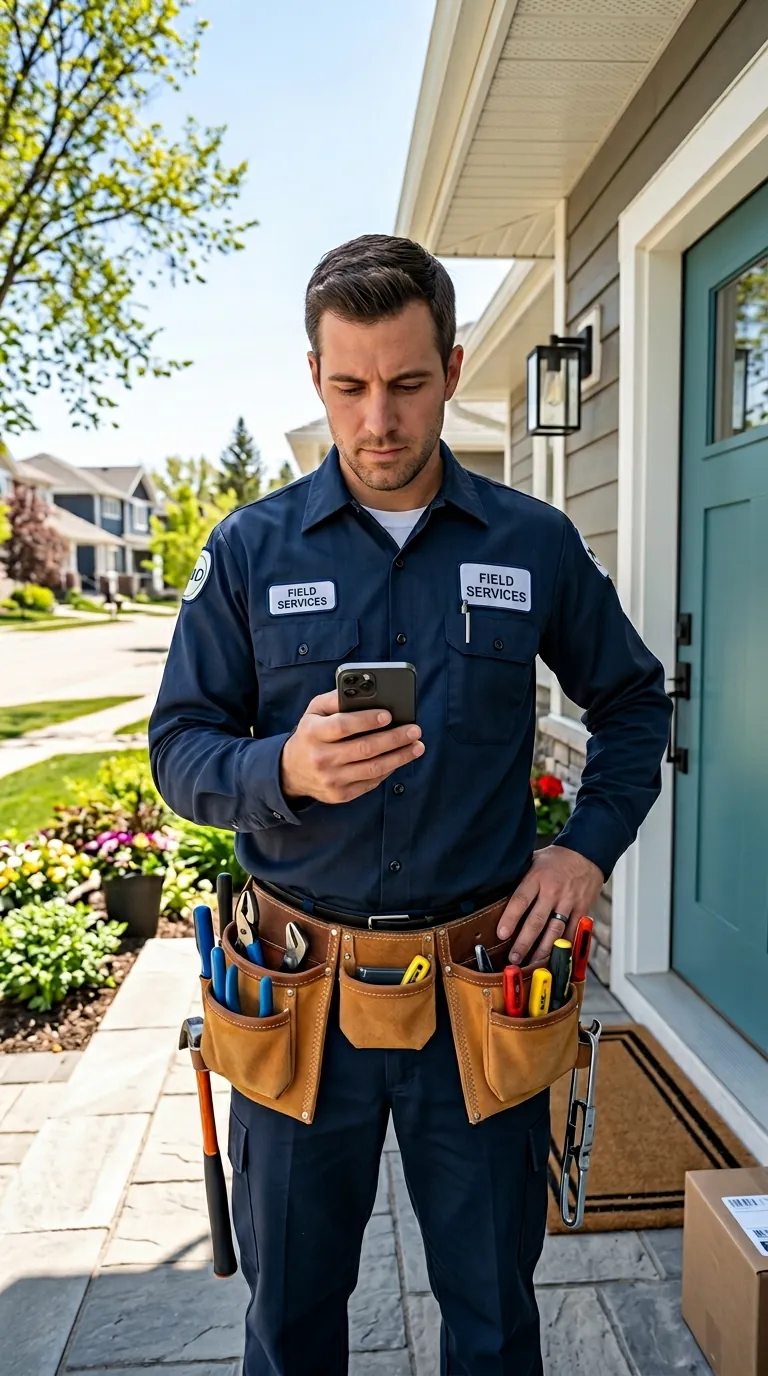
Think about the last time you ordered food delivery. You watched the dot move across the map. You knew exactly when the driver turned onto your street. You weren’t left guessing, calling the restaurant, or wondering if your order was even on its way.
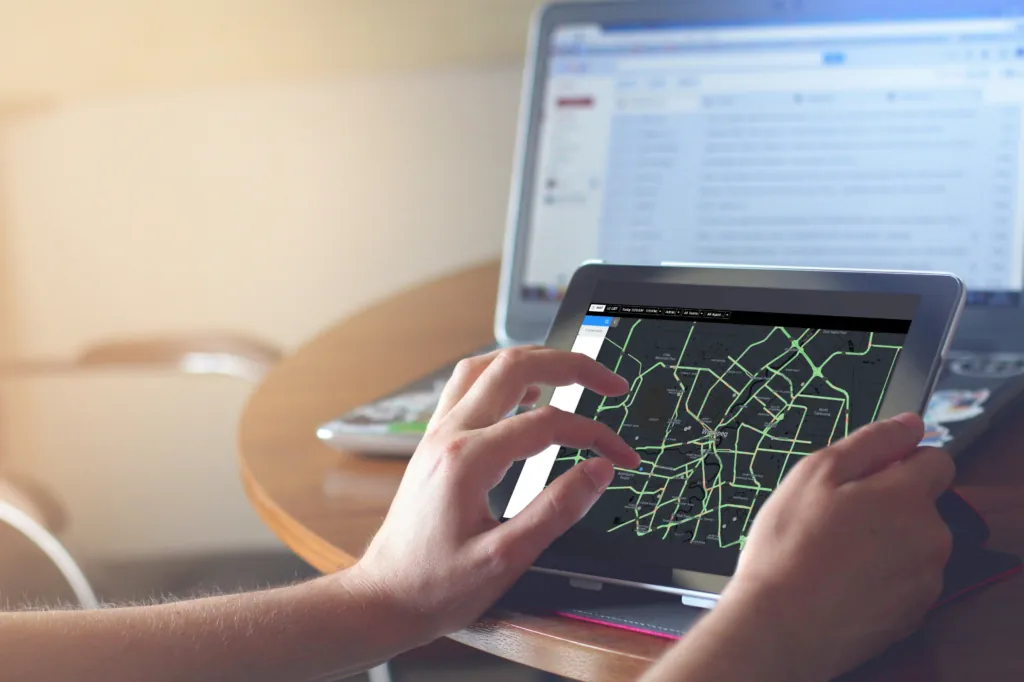
Now think about your customers. They’ve scheduled a $3,000 HVAC repair. They’ve taken the day off work. And they’re sitting at home with zero visibility — no ETA, no status update, just a vague four-hour arrival window and a number they’re not sure they should call.
That gap between what customers experience tracking a $15 meal and what they experience waiting for a $3,000 service call is costing you completed jobs, repeat business, and referrals you’ll never know you lost.
Real-time technician tracking — the kind built into ArrivePing — closes that gap. Here’s what the data says, and why it matters more than most service business owners realize.
The Real Cost of Incomplete Jobs
Job completion rate, often called first-time fix rate (FTFR), measures the percentage of scheduled appointments that get fully resolved on the first visit. It’s one of the most important metrics in field service — and most businesses don’t know where they actually stand.
According to Aberdeen Group research, the top 20% of field service organizations achieve a first-time fix rate of 88% or higher. The bottom 30% sit at 63% or below. The industry average hovers around 80% — meaning roughly one in five scheduled jobs requires a second visit.
That second visit is where the costs pile up:
- A repeat truck roll carries direct vehicle and labour expense before you even count technician time.
- According to the Service Council, 49% of customers who have a poor field service experience will not use that provider again.
- Administrative hours spike as your office team rebooks appointments, handles complaint calls, and manually rebuilds the day’s schedule.
- Technician overtime climbs when inefficient scheduling pushes your team into extended shifts to cover missed stops.
Closing the gap between your current FTFR and the top-20% benchmark isn’t a minor operational improvement. At scale, it’s the difference between a business that’s grinding and one that’s growing.
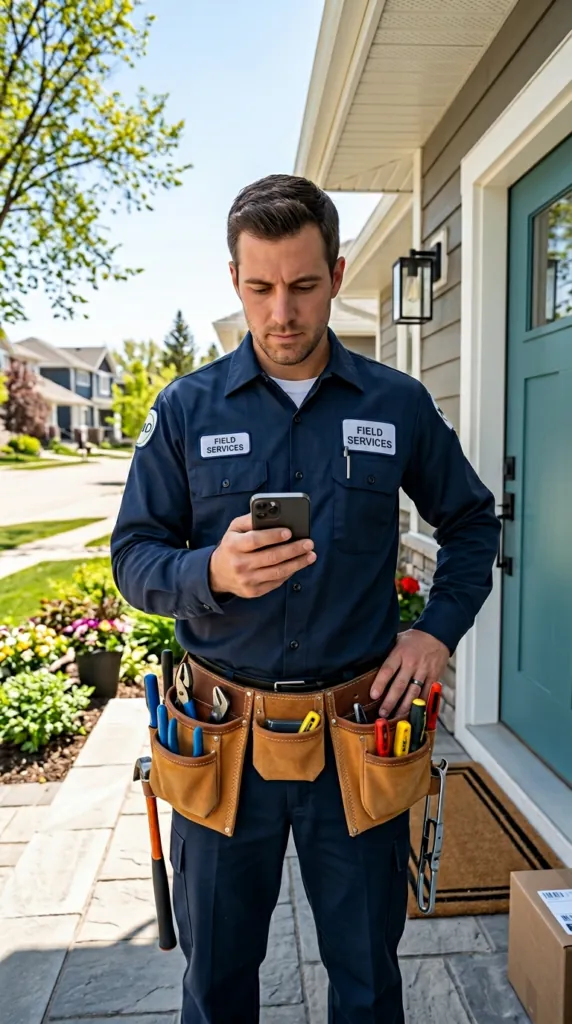
What ArrivePing’s Live Tracking Actually Does
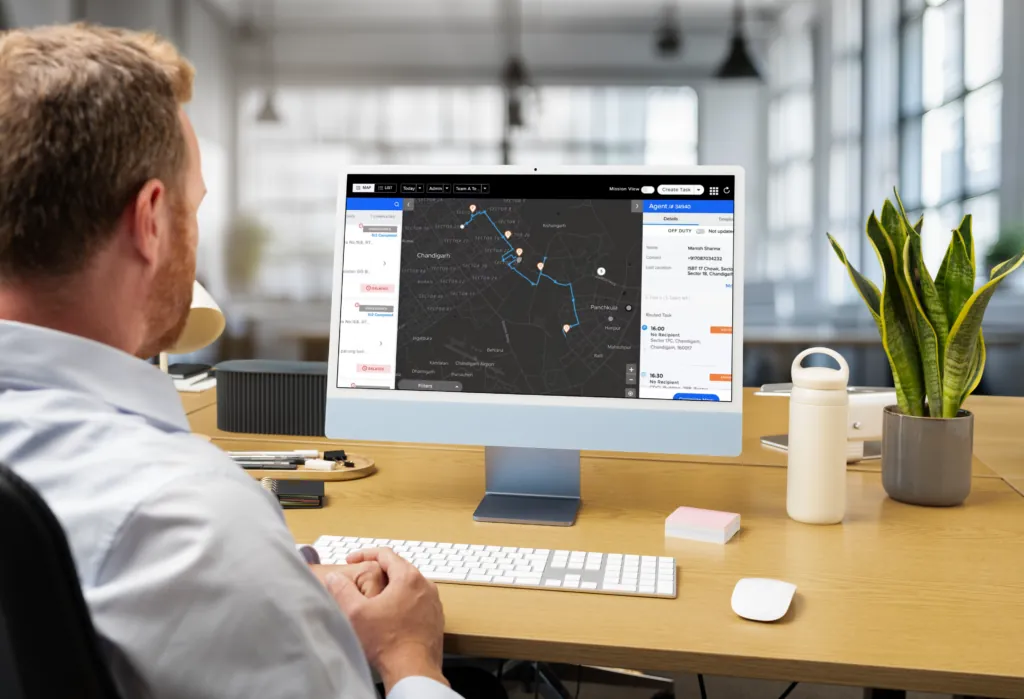
ArrivePing gives dispatchers and managers a live map of every technician in the field — where they are, which job they’re on, and how long they’ve been on-site. Location comes from the technician app on their phone, so there’s no vehicle hardware to install.
But it goes well beyond a map pin. The platform surfaces the operational information that drives real decisions:
- Live ETAs on the customer’s tracking page, based on where the technician actually is, not the optimistic estimate your tech gave at 7am
- Job status on the dispatch board — en route, on-site, complete — so dispatchers can read the entire day at a glance
- Automated text and email notifications sent directly to customers when a technician is on the way
- Scheduling and a dispatch board, with automatic assignment that dispatchers can override when the day changes
- Status updates from technicians in the field through the iOS and Android app, without a call to the office
The result is a feedback loop — operational information your team can act on in real time, not after the fact.
Five Ways Live Tracking Directly Improves Completion Rates
1. Dispatchers Can Intervene Before a Job Is Lost
Without visibility, a dispatcher finds out a job is at risk in one of three ways: the technician calls in, the customer calls to complain, or the day ends and the job simply didn’t happen. That’s always too late.
With a live map, a dispatcher who sees a technician running 45 minutes behind can make a proactive decision before the problem becomes a failure — reassign the next job to a closer tech, or bring in additional coverage — while ArrivePing sends the waiting customer a running-late notice automatically. Early intervention stops incomplete afternoons from cascading into incomplete days.
Aberdeen Group research found that companies using real-time scheduling tools resolve field exceptions 41% faster than those relying on manual oversight.
2. Closest-Technician Dispatch Creates Room for More Jobs
Driving eats a large share of the average field technician’s workday, and a meaningful portion of that time is recoverable.
ArrivePing’s automatic assignment ranks technicians by distance, skill match, availability and current workload, using where they actually are rather than where they were scheduled to be an hour ago. The math is straightforward: a technician who recovers 45 minutes of daily drive time can realistically complete one additional job.
3. On-Site Issues Get Caught and Solved Faster
One of the most common causes of incomplete jobs is a technician arriving without the right parts or information — or encountering a complication with no fast way to escalate it.
ArrivePing work orders carry the job type, required skills, access notes and photos, so the technician sees what the job needs before leaving for it. Status updates from the technician app keep dispatch current through the day, so when a visit runs long or goes sideways, the office knows sooner and can coordinate a solution. That difference — catching a problem mid-job versus learning about it afterward — is often the difference between a completed visit and a costly callback.
4. Accountability Improves Without Micromanagement
There’s a well-documented relationship between visibility and performance. A 2024 Aberdeen Group study found that organizations actively tracking field service KPIs report 20% higher customer satisfaction levels and 15% higher technician productivity than those that don’t.
When technicians work within a platform that records arrival times, on-site time, and job status in a shared system, the data tightens up naturally — not because people are being watched, but because clarity creates accountability. A technician working in ArrivePing is more likely to flag delays proactively, communicate exceptions early, and stay on task. That communication loop is what turns a potential incomplete job into a managed exception.
The goal of live tracking isn’t surveillance. It’s giving your entire team — dispatcher, technician, and customer — an accurate picture of the day so decisions get made faster and with better information.
5. Customers Stay Put Because They Know You’re Coming
Here’s an often-overlooked driver of incomplete jobs: the customer isn’t home when your technician arrives.
Whether they stepped out, forgot the appointment, or gave up waiting after an overly vague arrival window — access failures account for a meaningful share of first-visit failures that had nothing to do with your team’s performance.
ArrivePing’s automated customer communication addresses this directly. When a technician heads out, the customer gets an automatic text or email with a link to a live tracking page and ETA. No manual call from the office. No guessing. No app for the customer to download. The same “your driver is 10 minutes away” experience that ride-share apps normalized — applied to the service call your customer actually scheduled and paid for.
Research from Salesforce’s 2023 Field Service Report found that 76% of customers expect companies to personalize their service experience. Accurate, real-time arrival communication is one of the simplest ways to deliver on that expectation, and to make sure the door is literally open when your tech gets there.
What This Looks Like in Practice
Consider a 10-technician service business running 8 scheduled jobs per tech per day. At a 70% first-visit completion rate, roughly 56 of those 80 daily jobs are getting fully resolved. At 82% — still below the top-20% benchmark — that number moves to 66.
Ten additional completed jobs per day. At an average ticket value of $200, that’s $2,000 in additional daily revenue. Annualized across a 250-day work year, that’s $500,000 in incremental revenue from a team you already employ, doing work you’ve already scheduled.
The math is straightforward. The technology to achieve it is accessible today.
What to Look for in a Tracking Platform
Not all real-time tracking tools are created equal. For small and mid-size service businesses, the practical considerations are:
Technician adoption. A system that requires a complicated process to update job status will be ignored in the field. Look for mobile-first tools that make status updates fast and intuitive — ideally triggered automatically through geofencing.
Integration with dispatch and scheduling. Tracking data is only as useful as your ability to act on it. A standalone GPS tracker that doesn’t connect to your scheduling workflow creates more administrative work, not less.
Automated customer communication. If the platform handles arrival notifications automatically, that’s one less task for your office staff — and one fewer customer sitting in the dark about when to expect someone.
Reporting and trend data. Day-to-day tracking is valuable. But longitudinal data — which routes run consistently long, which job types exceed estimates, which technicians have the highest completion rates and why — is where sustainable operational improvement lives.
ArrivePing covers the first three directly: geofenced arrival and an on-site time clock, automatic assignment on a shared dispatch board, and automatic on-my-way texts with a live tracking link. For trend analysis, job data exports to CSV, Excel, PDF or JSON and connects through webhooks, Zapier and Make, so it can feed the reporting tools you already use. It works alongside your existing CRM and accounting tools. No rip-and-replace, and most teams dispatch their first job within an hour of setup.
Getting Started
If you’re evaluating real-time technician tracking, the most practical starting point is an honest look at your current first-time fix rate and what’s actually causing jobs to stay incomplete.
Most businesses find that a handful of consistent patterns account for the majority of incomplete visits — and that those patterns are exactly what live tracking is built to surface and solve.
The technology isn’t magic. But paired with good operational discipline, it’s one of the most reliable ways to get measurably better performance out of the team you already have.
See how ArrivePing works for your team: book a demo.