The Hidden Cost of Ineffective Communication in Field Services
What poor communication costs field service and construction teams in lost hours, rework and delays, and how automated updates cut office-to-field calls.
Imagine a typical morning in a field service business: dispatchers are frantically calling technicians to find out their locations, technicians are waiting on hold to clarify job details, and frustrated customers are calling the office because their service window is closing and no one has arrived. This chaotic scenario is not just stressful; it is a massive drain on profitability. For home service businesses, construction crews, specialty trades, limousine services, and healthcare workers, the ability to communicate effectively is the backbone of daily operations. Yet, many companies still rely on outdated methods—endless phone calls, scattered text messages, and vague four-hour service windows.
The reality is that ineffective communication is silently eroding margins and damaging customer trust. When your team is disconnected, every service call becomes a potential bottleneck, leading to lost hours, frustrated clients, and a significant financial toll on your business.
The High Cost of Inefficiency
The financial impact of poor communication is staggering, and the data proves it. According to the Axios HQ 2025 Annual Report, ineffective communication costs companies hundreds of lost working hours and thousands of dollars in lost salaries each year.
“A single employee earning between $50,000 and $100,000 loses 35+ working days per year due to ineffective communication. That’s equivalent to a $10,140 salary loss per employee per year.” – Axios HQ
The problem is even more pronounced in industries that deploy people in the field. In the construction sector, for example, poor communication is responsible for 52% of all rework, costing the industry an estimated $31.3 billion annually in the United States alone (AbleMKR). Furthermore, 48% of project delays can be traced directly back to ineffective communication (Speakap).
When we look at the daily operations of field workers, the inefficiency becomes clear. Employees report spending only 63% of their workday executing core job responsibilities, with the remaining 34% consumed by distractions, avoidable meetings, and clarifying context (Axios HQ). In field services, inefficient routing and scheduling account for 25% to 30% of total operational costs (Fieldproxy). Every minute a dispatcher spends calling a technician for an ETA, or a technician spends waiting for job details, is a minute of lost revenue.
| The Cost of Poor Communication | Impact |
|---|---|
| Lost Time | 35+ working days lost per employee annually |
| Financial Loss | $10,140 salary loss per employee ($50k-$100k bracket) |
| Construction Rework | 52% of rework caused by miscommunication ($31.3B cost) |
| Project Delays | 48% of delays traced to ineffective communication |
| Operational Costs | 25-30% of field service costs due to inefficient routing |
A Better Way: Streamlining Field Work and Communication
The solution to this widespread problem is not to communicate more, but to communicate smarter. This is the idea behind ArrivePing, the nonverbal communication tool built by NVC360. By replacing chaotic phone calls with real-time, automated updates, ArrivePing removes much of the friction that causes delays and rework.
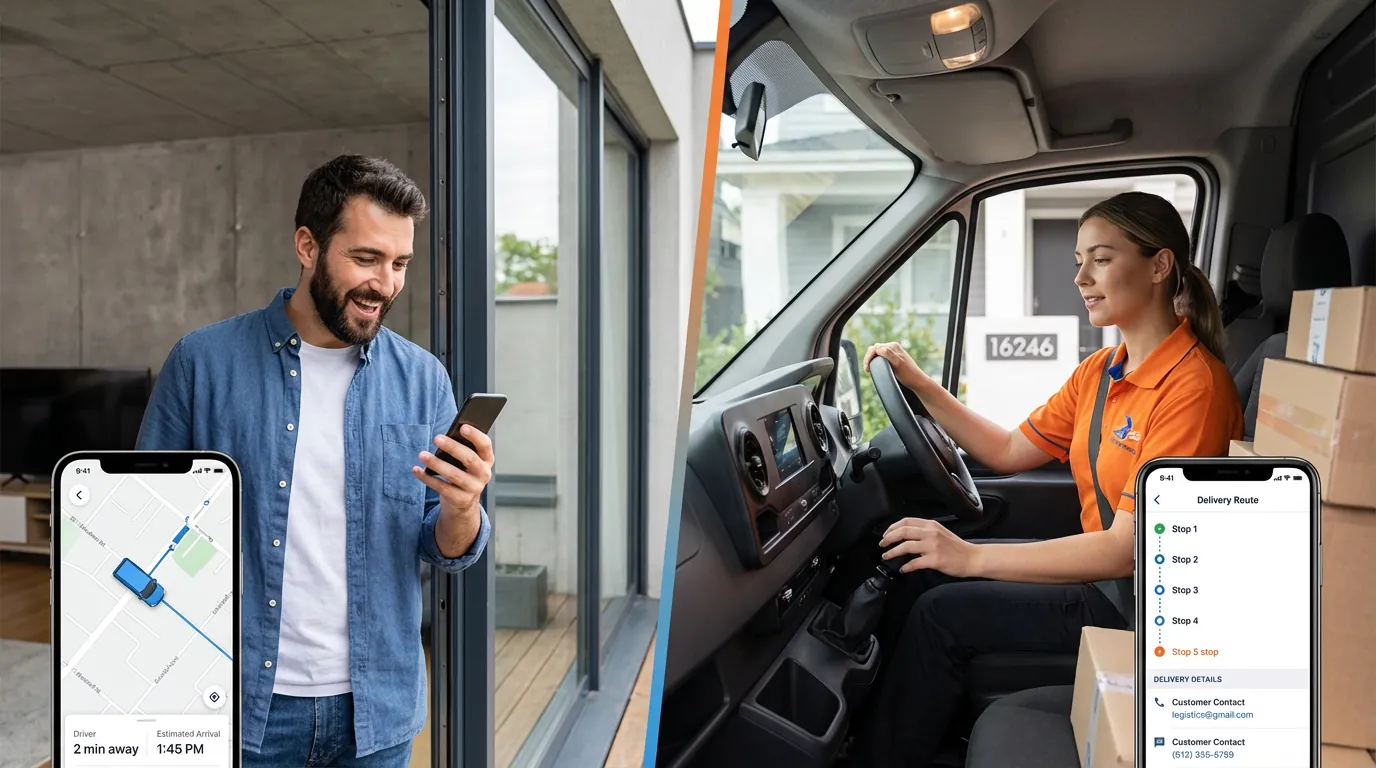
ArrivePing brings dispatchers, technicians, and clients into one system. A live map shows dispatchers where every technician is, using the technician app on their phone, and the dispatch board shows who is en route, on-site, or available. Automatic assignment ranks technicians by distance, skill match, availability and workload, and dispatchers can override it—all without a single phone call. That real-time control cuts downtime and gives back the hours your team now spends chasing updates.
Furthermore, custom work orders give technicians the details they need—job type, priority, time window, required skills, access notes, and photos—directly on their phones. This cuts down on constant clarification and helps get the job done right the first time, directly combating the rework that miscommunication causes.
The “Uber-Like” Experience in Action
Consider a busy HVAC company managing 50 technicians. Before adopting modern technology, dispatchers spent hours calling techs to get ETAs, while customers waited in frustrating four-hour windows.
With ArrivePing, the experience is entirely different. When a technician heads out, the system automatically sends the client an on-my-way text and email with a link to a live tracking page and ETA. The customer can follow their technician’s approach on a map, exactly like tracking an Uber, and can text or call with one tap.
This automated, nonverbal communication achieves three critical things:
- It eliminates inbound calls: Customers no longer need to call the office asking, “Where is my tech?” because they already have the answer in the palm of their hand.
- It keeps technicians focused: Field workers can focus on driving safely and completing the job, rather than answering calls from dispatch.
- It builds immense trust: Providing transparency and precision elevates the customer experience, turning a standard service call into a premium, 5-star interaction.
This level of operational efficiency is essential for home service businesses, construction crews, specialty trades, limousine services, home care workers, and any company that relies on a mobile workforce.
Conclusion: The Future of Field Service
Ineffective communication is a costly problem, but it is entirely solvable. The data clearly shows that relying on outdated communication methods leads to lost time, wasted salaries, and frustrated customers. By adopting a field operations platform like ArrivePing, businesses can remove the friction of verbal coordination, win back time lost to status calls, and deliver a modern, transparent, Uber-like experience.
The future of field service belongs to companies that leverage real-time data to empower their teams and delight their clients. It is time to stop calling for updates and start operating with total visibility.
See how ArrivePing works for your team: book a demo.