The Silent Drain: How “Phone Tag” is Costing Your Field Service Business
Why phone tag between office, technician and customer costs field service businesses time and leads, and how automatic ETAs and live tracking cut those calls.
Introduction: The Problem
In field service, every minute counts. Yet many businesses find themselves caught in a relentless cycle of phone calls—office to technician, technician to customer, customer back to office—a phenomenon commonly known as “phone tag.” This seemingly innocuous back-and-forth isn’t just a minor annoyance; it’s a significant drain on productivity, customer satisfaction, and ultimately, your bottom line. This article looks at the real costs of these communication breakdowns and how ArrivePing is built to cut them down.
The High Cost of Inefficiency
The financial toll of poor communication in the workplace is staggering, impacting businesses across all sectors, especially in dynamic field service environments. Studies have consistently shown that communication barriers lead to substantial productivity losses and operational inefficiencies.
According to SIS International Research, the cumulative annual cost due to productivity losses from communication barriers can exceed $26,000 per employee annually. For a business with just 100 employees, SIS puts the cost at over $530,000 annually in downtime simply for clarifying miscommunications. The Economist Intelligence Unit further reports that poor communication contributes to delayed or failed projects for 44% of companies surveyed, driving up expenses and hindering growth. Across companies, the total annual cost attributed to miscommunication and unclear expectations runs into the billions.
Beyond general workplace inefficiencies, the field service industry faces unique challenges, particularly with missed calls and the dreaded “phone tag” cycle. SkipCalls’ 2026 industry data on the cost of missed business calls reports that the average small business is losing over $26,000 per year directly to missed calls, with some service-based businesses experiencing losses exceeding $126,000.
The “Silence Tax” on Small Business:
- A large share of calls to small businesses go unanswered.
- Many potential clients will not call back if their initial call is missed.
- Customers often buy from the first business that responds, highlighting the critical importance of immediate communication.
Consider a plumbing business where the average job is worth $450. If just one viable lead is missed per working day, that adds up to roughly $112,500 a year in potential revenue. And this isn’t just about lost immediate revenue; it’s about the Lifetime Value (LTV) of a client, which can be many times the value of a single job.
Dispatchers and office staff also bear a significant burden from these communication inefficiencies. Manual scheduling eats hours out of every dispatcher’s week, and a lack of real-time communication adds delays to jobs. These delays not only frustrate customers but also reduce the number of jobs technicians can complete in a day.
A Better Way: Streamlining Field Work and Communication
The good news is that these inefficiencies are not inevitable. Modern technology offers practical ways to improve field service operations, breaking the costly “phone tag” cycle and boosting productivity. By leveraging integrated platforms, field service businesses can achieve real-time communication, optimize scheduling, and significantly enhance both technician efficiency and customer satisfaction.
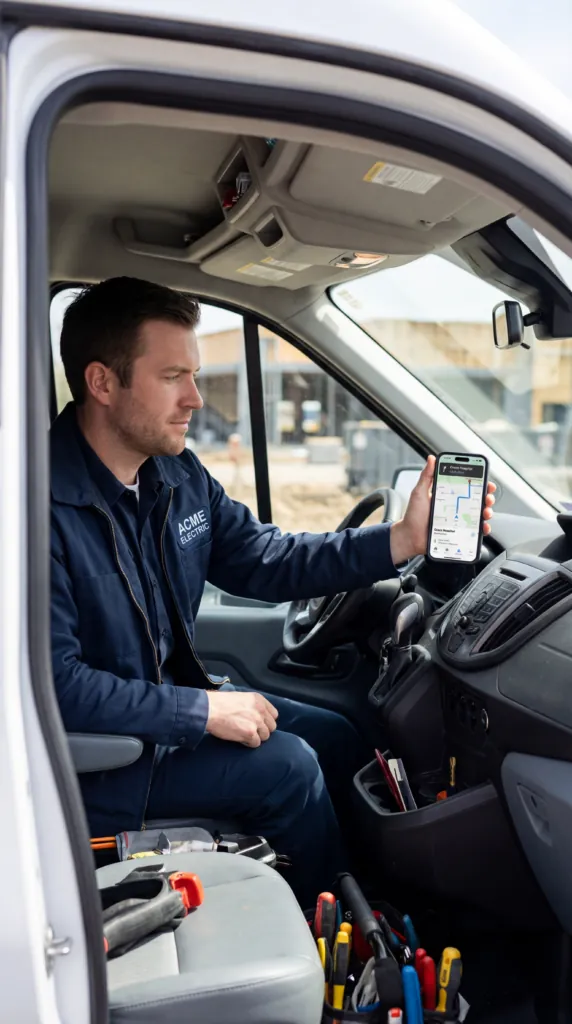
Mobile technology has changed field service. Technicians equipped with mobile apps can complete more jobs per day than those using paper-based systems, and real-time access to customer history, equipment manuals, and parts availability shortens the time spent on each service call. This direct access to information significantly reduces the need for technicians to call the office for details, cutting down on the “phone tag” that plagues traditional operations.
The impact on first-time fix rates matters just as much. When technicians arrive with the right information, fewer jobs end in a callback. This not only saves time and resources but also dramatically improves customer satisfaction.
The “Uber-Like” Experience in Action
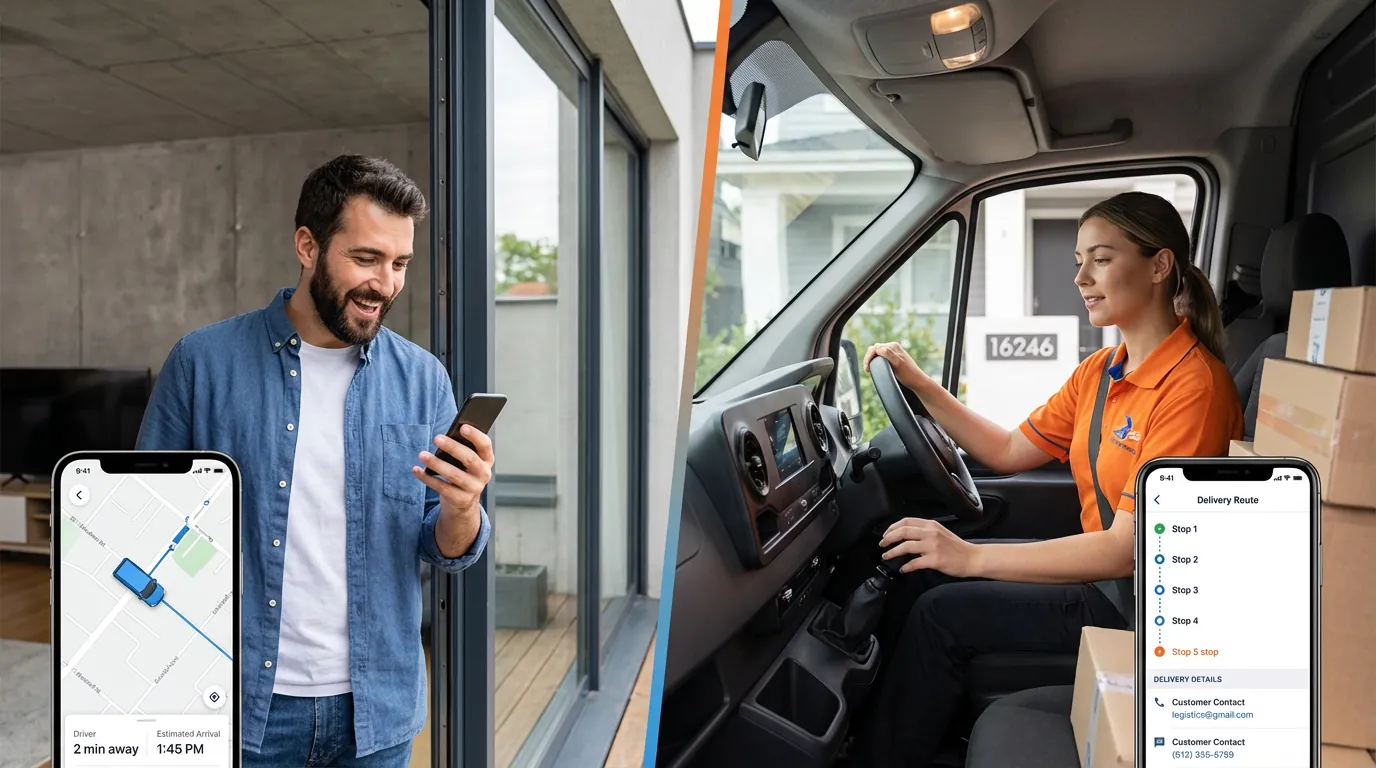
Imagine a scenario where a customer books a service appointment, and once the technician heads out, they can follow along just like tracking an Uber ride or a pizza delivery. This is the “Uber-like” experience that ArrivePing brings to field service.
With ArrivePing, far fewer calls bounce between the office, technicians, and homeowners. When a job is dispatched, the technician receives all the necessary details in the technician app on their phone. When they head out, the customer receives an automatic on-my-way text or email with a link to a live tracking page showing the technician’s progress and ETA. If a job slips, a running-late notice goes out automatically, so the office doesn’t have to make multiple calls.
This communication flow means:
- Reduced Office Workload: Dispatchers are freed from repetitive status update calls, allowing them to focus on more complex scheduling and operational tasks.
- Increased Technician Efficiency: Technicians spend less time on the phone and more time on the job, leading to more completed service calls per day and higher revenue.
- Enhanced Customer Satisfaction: Customers appreciate the transparency and proactive communication, and a customer who knows when the technician will arrive is far more likely to recommend you.
- Less “Phone Tag”: Dispatchers see every technician on a live map, and customers can text or call the technician from the tracking page, drastically reducing miscommunications and the need for constant phone calls.
ArrivePing turns the traditional, reactive field service model into a proactive, efficient, and customer-centric operation. It bridges the communication gap, turning potential frustrations into smooth experiences.
Conclusion: The Future of Field Service
The costs of communication inefficiencies and “phone tag” in field service businesses are undeniable. From lost revenue due to missed calls to reduced productivity from constant interruptions, these issues significantly impact profitability and growth. The solution is clear: embracing modern, integrated platforms that prioritize real-time communication and transparency.
ArrivePing by NVC360 is built to move you beyond outdated communication methods, offering an “Uber-like” experience for both your team and your customers. It launches in November 2026.
See how ArrivePing works for your team: book a demo.