Become the Preferred Provider: How Loyalty Cuts Customer Acquisition Cost
Repeat customers and referrals cost far less than new ones. The data on loyalty, waiting and texting, and a playbook for becoming the provider people call.
The cheapest customer you will ever win is the one you already have
Every service business pays twice for a customer who does not come back. First you pay to win them: ads, lead fees, the hours a salesperson spends quoting. Then, when they book someone else next time, you pay all of it again to replace them.
Becoming the preferred provider is the way out. The preferred provider is the company a homeowner or property manager calls first without comparing quotes, recommends to a neighbour and defends in a review. Preference turns one job into a decade of jobs, and it does it without a marketing budget.
This post makes two arguments with data behind them. First, loyalty is the most reliable way to lower customer acquisition cost (CAC). Second, in home services the fastest route to loyalty is a low-friction arrival experience: the customer knows who is coming, when they will arrive, and never has to pick up the phone to find out. We call that nonverbal communication: texts, a live map and status updates that answer the question before it is asked.
The arithmetic of being preferred
The economics of retention have been studied for decades, and the direction never changes.
- Replacing a lost customer takes about three new ones. McKinsey's 2023 analysis of experience-led growth found that U.S. companies leading on customer experience grew revenue at more than double the rate of laggards from 2016 to 2021, and that experience-led strategies lift cross-sell rates by 15–25% (McKinsey, 2023).
- Small retention gains compound. Bain & Company's Fred Reichheld reported that in financial services a 5% increase in customer retention produces more than a 25% increase in profit (Bain). You will often see this quoted as "25% to 95%"; the verifiable Bain figure is "more than 25%" for that sector, which is plenty.
- Acquisition is expensive, however you count it. Harvard Business Review notes that, depending on the study and the industry, acquiring a new customer runs five to twenty-five times the cost of keeping an existing one (HBR, 2014). HBR does not name a single study behind the range, so treat it as the shape of the problem rather than a precise multiple.
- Repeat customers spend more over time. In Bain's classic online-loyalty study, the average repeat customer spent 67% more in months 31–36 of the relationship than in the first six months, and a shopper's tenth purchase was nearly 80% larger than the first (Bain / Mainspring).
- Loyal customers bring the next customer with them. The same Bain study found that after ten purchases a shopper had referred seven people. A peer-reviewed study of about 10,000 bank customers found referred customers were worth at least 16% more than non-referred customers with the same profile, and stayed longer (Schmitt, Skiera & Van den Bulte, Journal of Marketing, 2011). Nielsen's global trust study puts recommendations from people we know at the top: 88% of respondents trust them above any other channel (Nielsen, 2021).
Put those together and the preferred provider's CAC is not just lower; a growing share of new customers arrive at a cost of zero, pre-sold by someone the buyer trusts.
What breaks loyalty in home services: waiting and silence
If loyalty is the asset, a bad experience is how it gets spent. The research is unusually consistent on how little it takes.
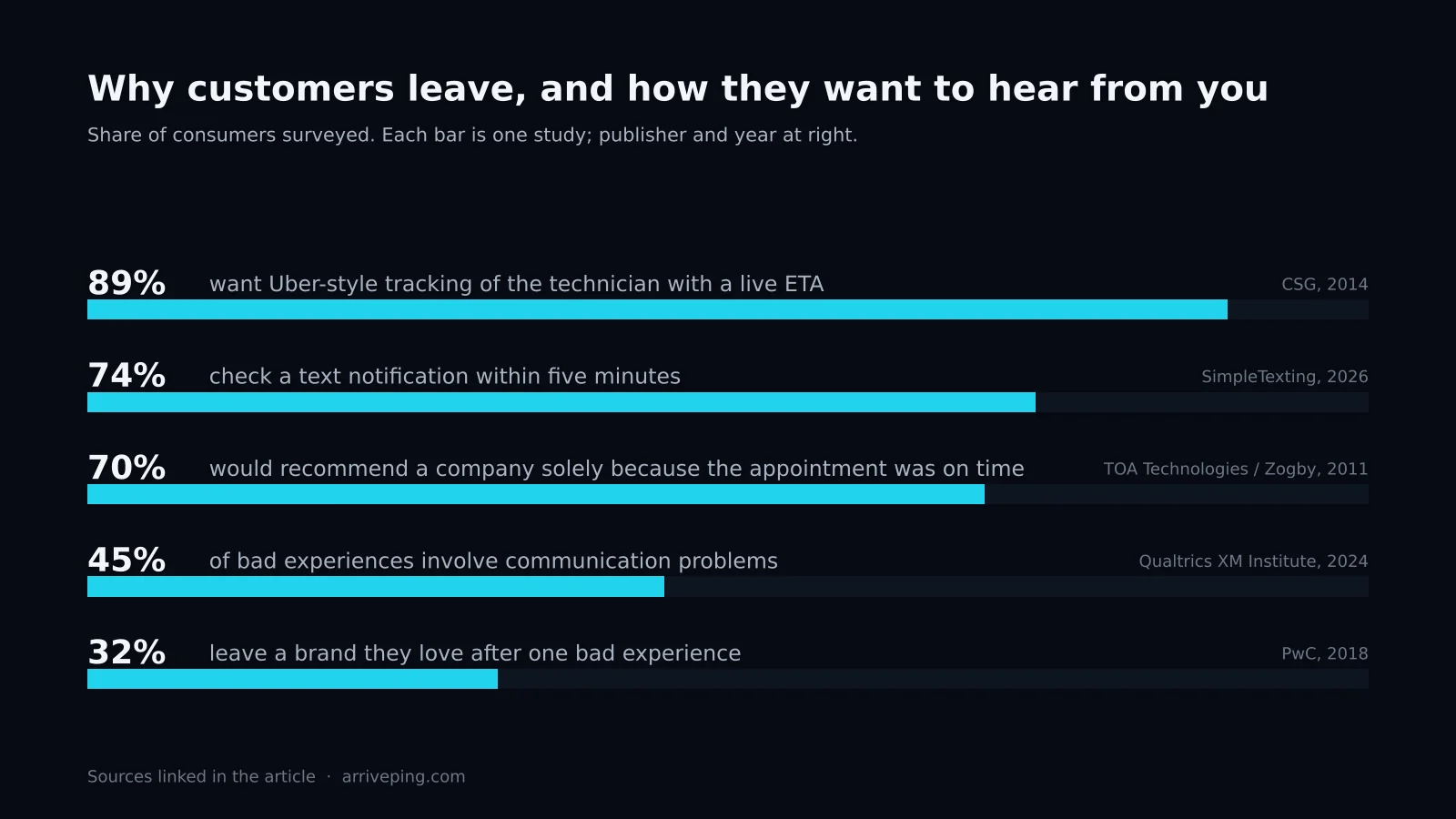
- One bad experience is often enough. PwC's survey of 15,000 consumers found that 32% would stop doing business with a brand they loved after a single bad experience; in the U.S., 59% walk away after several and 17% after just one (PwC, 2018). Zendesk's 2025 benchmark says more than half of consumers switch after one bad experience and 73% after several (Zendesk, 2025).
- Communication is the second most common cause. Qualtrics XM Institute, surveying about 24,000 consumers across 23 countries, found that bad experiences put $3.8 trillion of sales at risk in 2025. When consumers described what went wrong, service delivery issues came first (46%) and communication issues a close second (45%), and communication was the top-cited problem in 13 of 23 countries (Qualtrics XM Institute, 2024). Their 2026 update puts nearly $3 trillion at risk, with 47% of bad experiences leading customers to cut spending (Qualtrics, 2025).
- Waiting is the home-services version of a bad experience. In a 2011 TOA Technologies / Zogby survey, Americans reported waiting nearly four and a half hours for service and delivery appointments, about two and a half hours longer than expected, and half had burned a sick day or vacation day to wait at home. The same survey found 70% would recommend a company solely because the appointment was on time (TOA Technologies, 2011).
- The day rarely goes to plan. Salesforce's technician research found 47% of field appointments do not go as planned, and 38% of technicians say their schedules are often disrupted by issues such as customer miscommunication (Salesforce, 2025).
- Experience is now judged alongside the work itself. Salesforce's State of the Connected Customer found 80% of customers say the experience a company provides is as important as its products and services, and 77% expect to interact with someone immediately when they contact a company (Salesforce, 2023).
Notice what these have in common (we wrote about the window itself in End the 4-hour service window). The furnace got fixed. The technician was competent. The customer still left, because of the two hours spent staring out the window and the three calls to an office that could only say "he's on his way."
Nonverbal communication: the text, the map and the ETA
The fix is not more phone calls. It is removing the need for them. Customers have told researchers, repeatedly, how they want to hear from a service business.
- They want to see the technician coming. In CSG's survey of U.S. consumers, 89% preferred an Uber-like tool showing the technician's location and a continually updated arrival time, and 56% wanted an alert if the technician was running late (CSG, 2014). That was a decade before ride-share tracking became the default expectation for everything.
- They read texts, fast. In SimpleTexting's January 2026 survey of 1,000 U.S. consumers, 74% check a text notification within five minutes and 86% are opted in to receive texts from businesses; when they have a question, more prefer to text a business (33%) than call it (18%) (SimpleTexting, 2026). EZ Texting's 2026 report found texting is the preferred channel for appointment reminders (65%), 87% check a new text within 15 minutes, and text (46%) has overtaken the phone (43%) as the way consumers prefer to contact a business (EZ Texting, 2026). Both are vendor surveys; both point the same way.
- Proactive beats reactive, and almost nobody does it. Gartner's survey of more than 6,000 customers found proactive service lifts Net Promoter Score, satisfaction, effort and value scores by a full point each, yet only 13% of customers reported receiving any proactive service at all (Gartner, 2020).
This is why we describe the arrival experience as nonverbal. The on-my-way text, the live map, the ETA that updates as the van moves, the "arrived" confirmation: none of it requires a conversation. The customer gets certainty without effort, and your office gets its phone lines back.
How a low-friction arrival lowers CAC
Trace the money and the connection between a text message and your acquisition cost is direct.
- Fewer inbound calls, more capacity. Every "where is the technician?" call is a dispatcher minute that is not booking the next job. Answering the question before it is asked, on the customer's phone, returns that time to revenue work.
- Fewer bad experiences, fewer silent defections. With communication implicated in 45% of bad experiences and one bad experience enough to lose a third of customers, closing the information gap protects the lifetime value you already paid for.
- More reviews, better reviews. BrightLocal's 2026 survey found 97% of consumers read reviews for local businesses, 68% will only use a business rated four stars or higher, and 89% expect owners to respond to reviews (BrightLocal, 2026). On-time arrival is the thing people mention in a five-star review, and 70% say it alone would earn a recommendation.
- More referrals at zero CAC. Referred customers are worth at least 16% more and stay longer. Referrals come from customers who felt looked after, and the arrival is the moment they feel it most.
- Pricing power. PwC found consumers will pay up to a 16% premium for a great experience, and that speed and convenience are what most of them mean by "great" (PwC, 2018). The preferred provider does not have to be the cheapest quote.
A low-friction playbook
You do not need a new brand to become the preferred provider. You need to remove friction at the five moments the customer feels it.
- Confirm in writing, with a real window. Send the appointment confirmation by text with the window, the technician's first name and what to have ready. Give the customer one reply path if the time no longer works.
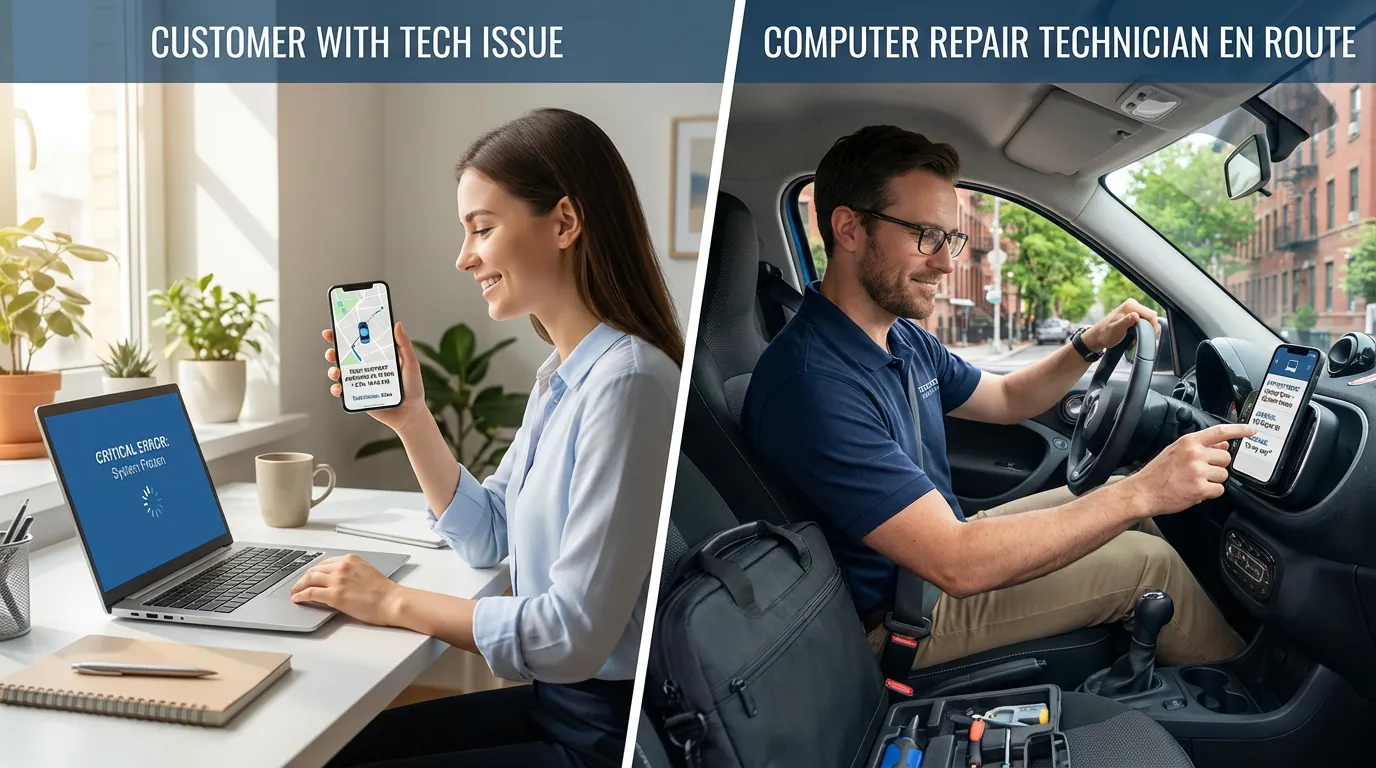
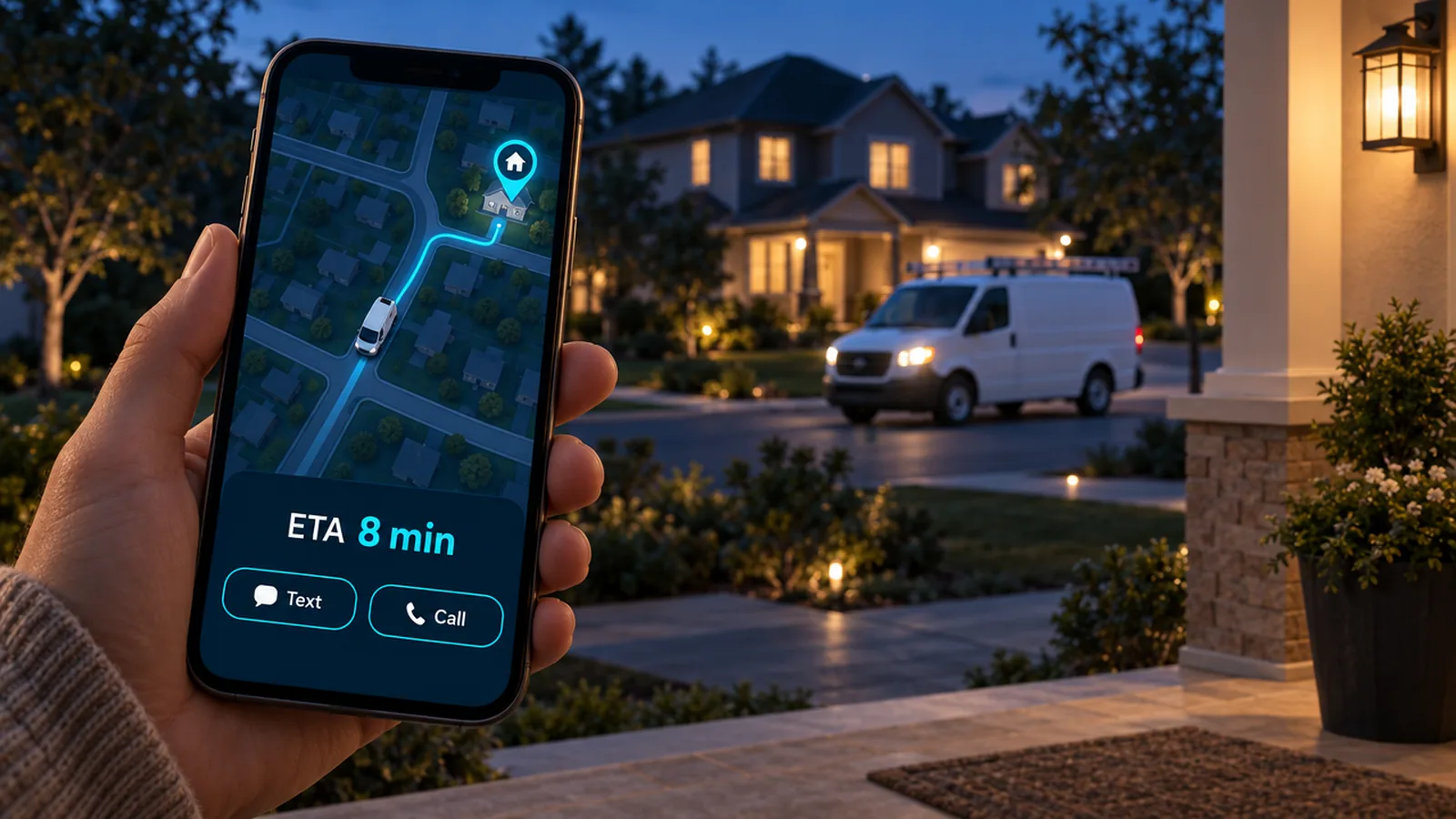
- Send the on-my-way text with a live link. When the technician leaves the previous job, the customer gets a text with a map and an ETA that updates as they drive. No app, no login.
- Tell them before they ask. If the day slips, the customer gets a running-late text with the new time automatically. A delay the customer learns about from you is a minor inconvenience; one they discover by waiting is a lost customer.
- Make contact one tap, without exposing personal numbers. Text and call buttons on the tracking page connect customer and technician directly, so a gate code or a parking question never routes through the office.
- Close the loop. Confirm arrival, then ask for the review while the on-time arrival is still fresh. Reply to every review; 89% of consumers expect you to.
How ArrivePing does this
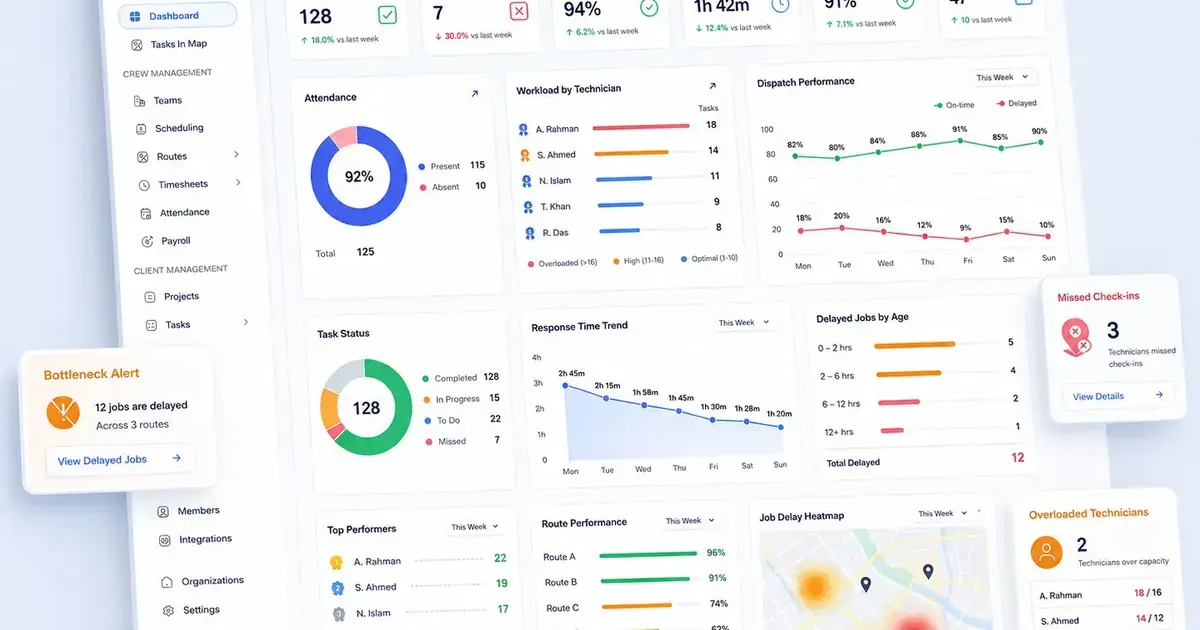
ArrivePing is dispatch software built around the arrival experience. It shows technicians and drivers on a live map, auto-assigns each work order to the closest qualified technician by distance, skills, availability and workload, and sends the job to the technician's phone. When the technician taps "on the way", the customer gets a text with a live tracking page: the technician's progress on a map, a live ETA, and buttons to text or call them. Running-late notices go out automatically when the day moves, a geofence records arrival, and location sharing with the customer stops the moment the technician reaches the door.
Location comes from the technician's phone, so there is no vehicle hardware to buy. For how the dispatch side fits together, see AI-powered dispatch software. Pricing is published: $49 USD a month including the first driver, with graduated per-driver rates that get cheaper as you grow. See how the on-my-way text works, customer notifications and pricing.
Frequently asked questions
What does "preferred provider" mean for a service business?
A preferred provider is the company a customer calls first, without comparing quotes, and recommends to others. Preference lowers customer acquisition cost because repeat jobs and referrals arrive without marketing spend, and referred customers are worth at least 16% more than non-referred ones.
How does customer loyalty reduce customer acquisition cost?
Every retained customer is one you do not have to replace; McKinsey estimates replacing a lost customer takes about three new acquisitions. Loyal customers also spend more over time, pay a premium for good experiences, leave the reviews that win local search, and refer the next customer at no cost.
Why do on-my-way texts matter more than phone calls?
Consumers now prefer to be contacted by text rather than phone for appointment updates, and most read a text within minutes. A text with a live tracking link answers "where is the technician?" without a conversation, which removes inbound calls from your office and removes uncertainty, the thing customers rate as a bad experience, from the visit.
Do customers need an app to track the technician?
No. With ArrivePing, customers receive a text or email with a link that opens a live tracking page in their browser, showing the technician on the way, the ETA, and buttons to text or call. There is no account to create, and location sharing ends on arrival.
Sources
- McKinsey & Company, Experience-led growth: A new way to create value (2023)
- Bain & Company, Fred Reichheld, Prescription for cutting costs
- Bain & Company / Mainspring, The Value of Online Customer Loyalty and How You Can Capture It
- Harvard Business Review, Amy Gallo, The Value of Keeping the Right Customers (2014)
- Schmitt, Skiera & Van den Bulte, Referral Programs and Customer Value, Journal of Marketing (2011)
- Nielsen, 2021 Trust in Advertising Study
- PwC, Experience is everything: Here's how to get it right (2018)
- Zendesk, Customer service statistics (2025)
- Qualtrics XM Institute, Bad experiences put $3.8 trillion of sales at risk in 2025 and Nearly $3 trillion at risk in 2026
- TOA Technologies / IBOPE Zogby, Cost of Waiting survey (2011)
- Salesforce, Field service scheduling research (2025) and State of the Connected Customer (2023)
- CSG International, Delivering a Differentiated Customer Experience in the Home (2014)
- SimpleTexting, 2026 Texting & SMS Marketing Statistics
- EZ Texting, 2026 Consumer Texting Behavior Report
- Gartner, Organizations need to move from reactive to proactive customer service (2020)
- BrightLocal, Local Consumer Review Survey 2026